Ruby Nation

Ruby Nation
Ruby Nation: The Webcomic

Tuesday, September 2, 2014

Drax Isn't Autistic, And Applicability Isn't Enough


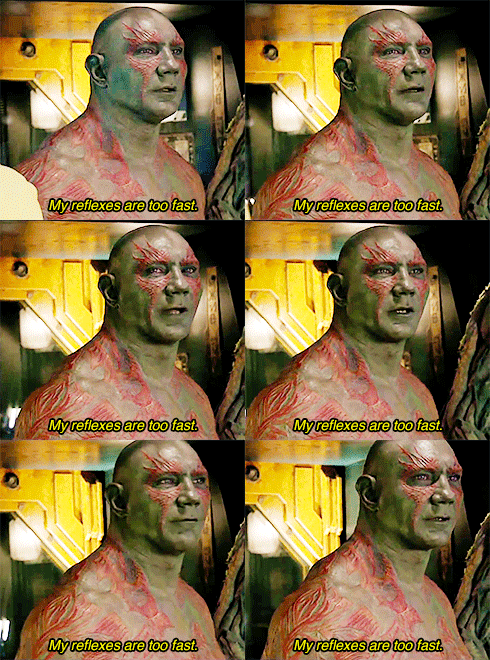
I assume that the readers of this blog, like most of America at this point, has seen or at least heard of the Guardians of the Galaxy. I also assume that readers of this blog, like most people on social media within some sort of fandom, have seen this widely circulated post about how a fan's autistic little brother connected strongly to Drax the Destroyer, as he also had difficulties with figurative language. This is a heartwarming vignette in microcosm, that a boy who has difficulties relating to people found solace in a superhero character who also has difficulties with metaphors (albeit due to his species and not his neurology). In macrocosm, unfortunately, it means little for representation of autism in popular fiction and only serves to underscore Hollywood's exclusion of difference, except on carefully controlled terms.

Because while Drax the Destroyer may have similarities to autistic spectrum traits, most notably his inability to grasp metaphors but also his restricted interests; his abilities in battle can be best described as savant-like. Unfortunately, none of that was intentional. In the movie*, Drax is an alien from a species who, like most alien species in fiction written by human beings, has a very restricted civilization with limited diversity of personality. A lack of figurative language is apparently universal across his species, and in the movie it serves as little more than a running gag. Drax no more represents an autistic experience than Groot represents a nonverbal experience, because both are completely fantastical characters who only connect back to real disability experiences if the audience is actively willing to apply those experiences to the characters.

The boy mentioned in the post was able to make the connection because Drax's quirks overlap substantially with his own life experience. The majority of people without autism (including those who have autistic loved ones; would the boy's sister who made the post have made the connection if her brother hadn't brought it up first?) would just see Drax as a big green dolt with some funny lines at his unwitting expense. Other people with autism might also not connect Drax's experiences to their own; I certainly did, even though I completely understand the desire to see other autistic people in fiction (and have even speculated about some characters being on the spectrum). It's incredibly unlikely that Drax would've adapted as an autistic character for this movie, and even if he were, he probably would've manifested as the usual stereotypes of the nerdy and physically incapable savant, who represents a constant burden on his loved ones. He likely would not have gotten any meaningful character development**, such as Drax's admission that his desire for revenge was ultimately just a cover for his grief over the death of his wife and child. An explicitly autistic character probably wouldn't get a wife and child in the first place, instead swearing vengeance for a long-suffering mother or a destroyed model train or any other stereotype that only reflects a disinterested outsider's willfully shallow understanding of the autism spectrum experience.

Of course, that's the larger problem with the Marvel Cinematic Universe; even if it has diverse characters, it's still subservient to the Hollywood Narrative, and demands a straight, white, male, and neurotypical star. Dave Bautista proved in this movie that he's a talented actor as well as an imposing physical presence and MMA fighter, but they wouldn't make him the protagonist of a movie that cost so much to make and was advertised so thoroughly. They'd probably be even less likely to put him in the lead if he weren't covered in green and red paint, and instead appeared as his mixed-Filipino-Greek self. Same goes for Zoe Saldana's Gamora, a Dominican actress whose biggest roles were as a blue elf giantess and as a green alien warrior***. The Marvel Studios movies may have had strong results by casting unlikely choices, but the movies, like the comics before them, still started with all attractive white guys. It might've been a strange casting choice to have Andy Dwyer from Parks and Recreation (a.k.a. Chris Pratt, a.k.a. BERT MACKLIN, FBI) as Peter Quill, but it was a million times more likely that they'd cast Chris Pratt than Aziz Ansari****.

There's still a clear heirarchy of what the producers funding these multimillion-dollar special effects orgies will allow. Handsome white dudes first, women and racial minorities second if at all, disabled characters never (unless as villains). They think audiences are willing to accept raccoons and trees as star characters before the physically and/or mentally "infirm". If audience members with disabilities identify with those characters, bully for them, but it's not going to make a green alien brute anything more than a green alien brute for the rest of the world-- least of all for the people actually making this stuff.

Perhaps I'm being too harsh, and I should be grateful that we even got this little story doing the social media rounds. Perhaps that's just the way representation works, that baby steps are all that can be expected from media aimed at a wide audience. You don't get to complex and sympathetic gay characters like Hulkling and Wiccan before you do the heavy-handed " Northstar is gay and is yammering on about AIDS" story, just like you don't get to Chris Claremont's powerful and alluring Storm before you get years of Stan Lee's***** useless, weepy female love interests. But social media has, for better or worse, made conversations of representation and privilege much more relevant now than they've ever been. And at some point, when real life gives you enough shit and the fiction in which you would normally find solace now appears all too complicit, you just gotta say-- Not. Good. Enough.

* Yes, I'm aware that Drax in the comics is a human spirit placed in a powerful body like Thanos, but that's not really relevant to the films. Just like Thanos in the comics is Jim Starlin's avatar of Freudian themes in love with a literal personification of Death, instead of a generic Big Bad who's yet to actually dirty his own hands.
** In so far as the movie had character developments. As a film, it's extremely predictable, and the humor is its saving grace. Similar to the Pirates of the Carribean films, the absurdist nature of the humor and the talents of its cast are all that stand between it and banality, though at least GotG has more to rely on that one Johnny Depp.
*** Yes, I'm also aware that Saldana was also Uhura, as well as Columbiana, Aisha from the Losers, and plenty of other roles that don't involve explosions, but my point still stands.
**** I would pay so much to see Tom Haverford as Star-Lord. Aziz Ansari has the "Small Name, Big Ego" character down to a science.
***** Edited because I've been aware that Stan Lee did write some great female characters as well, such as Medusa

Wednesday, May 28, 2014

Of Course The Cripple Is Evil: Iron Man 26 Thoughts

In the latest volume of Iron Man written by Kieron Gillen, it was revealed that Tony Stark is actually adopted, picked up to play the public role of the Starks' child while the real son of Howard and Maria was in hiding. This is because that boy was genetically modified in vitro by an alien super-intelligence to be a super-genius behind a new intergalactic order, but resultantly ended up with an irreparably damaged respiratory system and had to be kept in seclusion. That boy grew up to be Arno Stark, who's recently come out of hiding while still requiring life support to keep his lungs working (be it a literal iron lung or an Iron Man exoskeleton).

Many readers guessed that Arno would end up evil. The name is a dead give-away for any Marvel history fans, given how the previous Arno Stark was the evil Iron Man of 2020. There's also the long tradition of villains being handicapped or otherwise deformed, because of course people who look or function differently are the Other and are cast under suspicion. There was some hope that Arno would end up being a nice guy, since he seemed pretty amiable and he even referenced the "Evil Cripple" trope when talking about his reticence over becoming a public figure like his adoptive brother.

These hopes were dashed in the latest issue, when it was revealed that Arno was working on a new serum of Extremis. Yes, Extremis, the super-deadly biotech serum that weaponizes human beings, and often makes them monsters. The kind that temporarily infected Tony's body, saving his life and boosting his performance as Iron Man (as well as giving him wacky super-powers like mind-controlling satellites and healing from injuries to the point of being able to reattach a severed heel) but also driving him mad with the traumatic flow of new information, to the point of entering fugue states where he talked to "ghosts". And the kind that Tony's tried to eradicate in this very volume, seeing its grotesque potential for misuse even by people with good intentions.

It's possible that we're meant to sympathize with Arno, because of Extremis also has potential for beneficial medical applications. But all that potential means nothing given the circumstances, such as...

1.) Arno isn't doing this to help other people. He's doing to help himself, so that his lungs can be fixed and he can live without external support. Never mind the fact that his external supports give him far more capability than most people, since he's at least as smart as Tony and builds his own powered suits. He wants to be cured, even if he has to use a super-deadly monster-serum to do it. Basically, he's using Curt Connors logic. 

2.) Arno has no real identity outside of being a genius and being disabled. We don't really get much indication of Arno's thoughts and feelings beyond what the plot demands. Even though he spent most of his life in seclusion, he could still think, feel, and dream. Even without an exoskeleton that gives him mobility, he's got all those capabilities. But we don't get to see those capabilities, because all we get from Arno is what he does with Tony Stark, and now what he's doing to undermine Tony Stark. The hints of Arno's life outside technology and envy of working lungs, such as his interview with ultra-leftist reporter Abigail Burns, are only told and not shown.

3.) "Magical" sci-fi cures tend not to end well. This may be so common it's become cliche, but there's a reason writers don't often write stories where there are pills that can fix all ailments. Fiction is the place where people, creators and audience alike, work out their anxieties and achieve a meaningful catharsis. Sometimes it's the place where people hide from reality and go straight to escapism, but certainly Kieron Gillen is a savvy enough writer that he wouldn't just go with "Arno uses serum to fix his lungs, succeeds in doing so, then uses serum to fix world, and creates a Candyland Utopia where nobody feels bad".

Some have criticized this mentality as anti-progress and anti-science. Certainly that's a result of the bizarrely static nature of the Marvel Universe, which has to remain similar to our reality and can't allow the super-scientists to radically change our infrastructure. But the implications of the alternative are much more troubling. If this form of super-science solving everything is a reflection of a desires, that means we see a world of easy answers. Where every problem has a solution, and those solutions can be universally applied across all kinds of problems. Where we get to see the happy ending while skipping past all the hard work and tough decisions needed to get there. Where we trust that we can take a pill to make ourselves happy and healthy, and not have to worry about the side-effects. And worst of all, where we see being infirm and disabled as something that has to be completely eradicated, and can't comprehend the notion of people being okay with the way they are (or at least being okay enough with their disabled lives that they wouldn't risk their lives on a potential cure. I'm not downplaying the challenges that come with physical and mental disabilities; I'm saying that they AREN'T fates worse than death, the fate that gives you absolutely no other options. They're certainly not worse than "dying" by virtue of turning yourself into a monster and losing all sense of self).

 Arno says he wants to use Extremis as a universal cure, one that can be applied to all medical problems. Arno is confident that he can work out all the bugs, even though no previous scientist has done so. Even if he does avoid that particular consequence of his hubris, Arno's still making himself the authority on what should be cured and what shouldn't. Perhaps Arno will decide that homosexuality is a disease that needs to be cured? Perhaps he'll decide that darker colors of skin should be swabbed away by Extremis? And perhaps when people such as Tony Stark, a man whose adult life has been defined by physical and mental weaknesses but hasn't let that stop him from doing the right thing and avoiding the easy way out, oppose Arno's mentality, he'll decide to use force because his will is more important than anyone else's?

I know that it's a slippery slope argument, but by all accounts Arno's slope currently is devoid of any and all friction. I sincerely hope that the next issues will prove me wrong.

Thursday, February 20, 2014

My Response To The Michael B. Jordan Fantastic Four Casting


In response to the news HERE, though the Michael B. Jordan casting was known well before it was finalized today.

I do have misgivings with the castings (namely that Sue Storm was cast as Kate Mara, a white woman, when there are plenty of talented black actresses that have a harder time getting work and would've looked more like Jordan's sister), but the inevitable, often-racist shitstorm that comes with changing the race of 1960's characters for film is usually entertaining (if depressing) to watch. Especially when it's related to the Fantastic Four, a book that has struggled to be interesting and relevant ever since Jack Kirby left the book, barring a few standout periods (such as Byrne's run and the Waid/Weiringo stuff). 

Friday, January 17, 2014

I Got Issues Comic Reviews for 1/15/2014: Velvet, Miracleman, Amazing X-Men, and Ultimate Ultimates


Another week, another stack of comics (though unfortunately I couldn't find a copy of Voice in the Dark #3).

AMAZING X-MEN #3: The art by Ed McGuinness is an absolute dream, full of excitement and energy in every panel. The story is at this point mostly an excuse to give Ed McGuiness exciting things to draw. It's a Jason Aaron X-Men comic, which means it's full of wacky high-concept stuff first and characterization second. The interactions between the characters are perfunctory, especially with the obvious character shipping (and the revelation that Nightcrawler and Storm have always been in love with each other, and didn't Aaron just pair her up with Wolverine? Either she's polyamorous, which I wouldn't mind, or pairing her up is the most interesting thing Aaron has planned for Ororo, which I would seriously mind)At least this doesn't have any overbearingly wacky stuff like the 12-year-old Hellfire Club (literally the most annoying team of villains in Marvel history, from my perspective at least), but it's still a comic about the X-Men joining Nightcrawler in the afterlife to fight Satan and his pirate crew. In other words, it's the Axe Cop of the X-Men. But again, great art. RECOMMENDED.

ULTIMATE COMICS CATACLYSM: THE ULTIMATES #3: The Ultimate comics have stuck around far longer than they should have, the promise of a simpler, more relatable Marvel Universe long since expired in favor of a bunch of earth-shaking cataclysms. Galactus eating the world is the third time we've seen this happen, but this tie-in by Josh Fialkov and Carmine di Giandomenico has been surprisingly entertaining. It takes the rather predictable doomsday set-up and uses it to do a fast-paced, snappily-written story with a snarkier take on the formula. Since the story has Nick Fury's Ultimate Howling Commandos (re: a bunch of second and third stringers, such as Ultimate Stature and Ultimate Hercules) on an essential doomsday mission against a techno-organic Gah Lak Tus cult. The characters are suitably dysfunctional, but there's a bit of pathos too with Danny Ketch's dying words, and his eventual fate. It doesn't really end, but it's interesting enough that I'll actually try the Ultimate FF book that follows. The art by Carmine di Giandomenico is exceptional too, which nearly matches the widescreen detail of Bryan Hitch but has a fluid, expressive line more appealing than the usual "photo-realism" we see in this sort of book. RECOMMENDED.

MIRACLEMAN #1: It's 12 pages of the Alan Moore/Garry Leach run padded out with old Mick Anglo strips for childred and extra material for a price of $5.99. The great lost work of Western comics is why people are here, but it's not even the majority of the product; Marvel's gouging the audience who'd buy this for all they're worth. I'd never read the original Miracleman stories, so I can't really judge the overall story. This prologue is beautifully drawn by Leach, but the script is extremely familiar in its portrayal of the superhero as an outlet for a mid-life crisis-- though that's be due to its influence, both on Moore's later works and the genre in general. Still, this issue itself is an expensive curio, so I'd have to give it a MILDLY RECOMMENDED.

VELVET #3: It's great that Ed Brubaker and Steve Epting, two creators perhaps best known for the Winter Soldier story of Captain America, can now do their thing unfettered by Marvel franchises and apparently make a living at it as well. In this case it's Velvet, a.k.a. "what if Moneypenny went on a rampage to avenge a dead James Bond". It kind of defies belief that Velvet can be such a strong action heroine at her age (at least in her fifties) with her long retirement from field work, but given how my favorite spy story involves a man physically in his seventies fighting against mooing robots and nanotech vampires, I'm in no position to complain. This is the sort of story that seems like a perfectly natural take on the high concept, but still comes across as novel and exciting. Velvet's perspective as a woman offers her a distinct insight in to the Martini-flavored spy game, as she's a PROTAGONIST who uses the Honey Trap techniques instead of a love interest/femme fatale. Everything about this book, from the script to the art to the coloring to the basic magazine design with the white gutters, just works. STRONGLY RECOMMENDED.

Wednesday, January 15, 2014

Top 10 Better Alan Moore Miracleman Reprint Credits than "The Original Writer"


Marvel has enough brass to reprint Miracleman against Moore's wishes without actually putting his name on the book, but why stop there...

--Prospero
--Jordan Elliott
--Alan Smithee
--Storybook Smith
--Mallan Oore
--Captain Adam
--The Occupier
--Kid Moore
--Sodam Yat
--Alan Morrison

Friday, January 10, 2014

I Got Issues Comic Reviews Week of 1/8/2014: Sex Criminals, Kamala Khan, Sad Wolverine, and the Colonial Iron Man


Trying a new format for reviewing comics, so these aren't going to go over two paragraphs each; I'm going for expedience as well as quality critique. So here's what I read this week...

Sex Criminals #4: Matt Fraction and Chip Zdarsky's painfully realistic story about people who stop time when they fuck continues. In this issue, Jon and Suzie meet even more people with their "condition", albeit a peacekeeping force who apprehend the Quiet's so-called "Sex Criminals"(TITLE DROP!). While I'm not entirely sold on the world-building of the Sex Police, that's not really the point; this is still Suzie's story, and about how her condition adds even greater complexity to the already nigh-incomprehensible territory of human intimacy. The best parts are still Suzie's narration, as she talks about her past and what sorts of things she did during the Quiet (including her first illegal activity, using the time freeze to frame her friend's rapist college boyfriend for marijuana possession-- a morally ambiguous approach with a similarly ambiguous outcome).

With Fraction's script and Chip Zdarsky's expressive art and detailed backgrounds (including some of the greatest ambient detail ever depicted for a store called "Cumworld", Sex Criminals continues to be the frank, mature sex talk the medium so badly needs. STRONGLY RECOMMENDED.

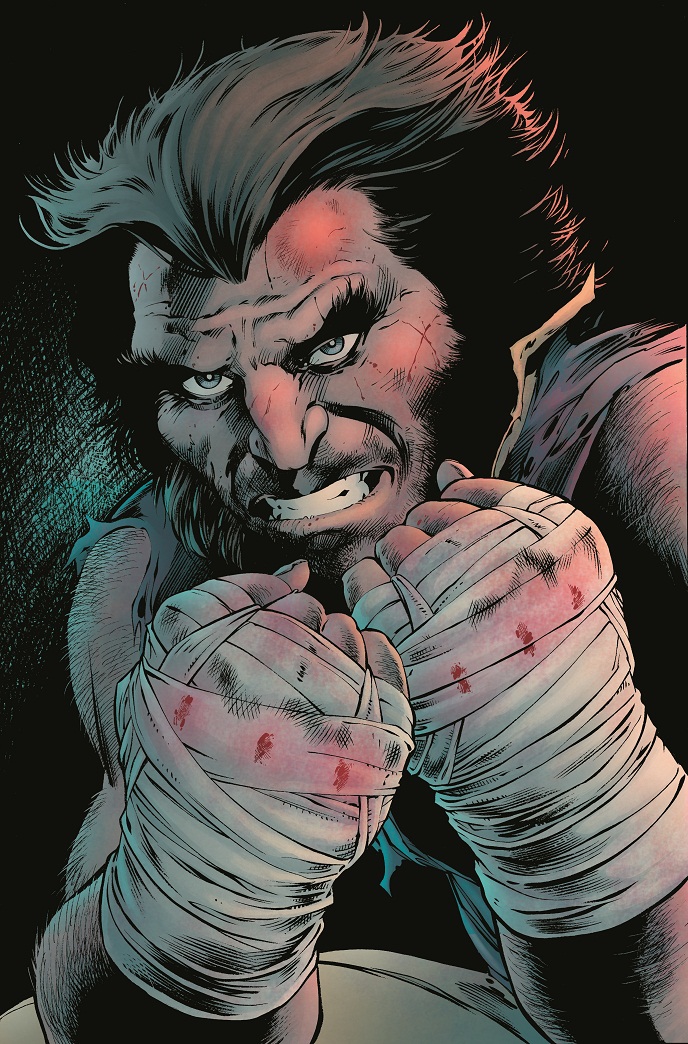
Wolverine #13; The finale of Killable, setting up the new direction for the supervillainous relaunch. As expected, Wolverine has no chance against Sabretooth without his healing factor. Sabretooth doesn't kill Logan, but instead takes the opportunity to rub Logan's mortality in his face, lecturing him on how they're not so different and how Logan's moral hypocrisies are unavoidable without his regenerative crutch. It's a brutal scene, and one of the few effective uses of the Origin continuity that I've seen, since Sabretooth calls attention to the fact that underneath his stereotypical man's man demeanor, Logan was still born as sissy nobleman's son James Howlett, and his attempt to be the blue collar hero falls apart given his privilege (both the initial wealth and the later, now absent mutant indestructibility). I hope that Sabretooth gets his not-so-inevitable comeuppance from Logan, though; similar to the Joker or the Green Goblin, Sabretooth is the kind of Complete Monster arch-villain who enjoys the kind of invincibility only a shared universe allows, and the fact that such rotten characters haven't been killed (in a permanent manner, at least) demonstrates an inherent futility to the nature of the shared universe superhero. At least Logan's killed Sabretooth before (though it obviously didn't stick), but the guy is one of the most successful characters in the Marvel Universe, and he owes it largely to his complete lack of moral restraint. "The best lack all conviction, and the worst are filled with passionate certainty", as Yeats would put it.

Perhaps once Logan becomes a super-villain himself, he'll learn that being a bad guy is the way to go in a world where nobody important to Marvel's bottom line really dies, healing factor or not. Until then, it's a powerful story, made all the more powerful by the choice the badly injured Logan is given towards the end. It's another moment that's simultaneously easy to predict in terms of logic but difficult to prepare for as an emotional response. Another great issue from Paul Cornell, and sadly the final issue with Alan Davis drawing-- there's a reason he's a legend in comics, and that reason is seen in effortless nature of this issue's storytelling. STRONGLY RECOMMENDED.

IRON MAN #20: Easily the weakest book I read this week, though that's partly because everything else was so great. Still, the Kieron Gillen run on Iron Man continues to underperform, competent but not at the level I'd expect from the one writer to make modern Cyclops into a sympathetic character.  There have been many extenuating factors, most notably the immediate shadow of Matt Fraction's brilliant run, the wretched Greg Land art plaguing the first year or so, but also the fact that most of it was stuck out in space due to the Guardians of the Galaxy status quo, and the fact that the Secret Origin story was resultantly told light years away from Tony's home planet. Not to mention thirtysomething years away from a point where the events within the origin story might have actually been relevant, as Tony had plenty of nurture to overcome whatever hypothetical genetic tampering would've been done to him in vitro, but I digress.

This current storyline is a mixed bag. On the one hand, there's the strong central idea of Tony building his own city over the ruins of the Mandarin's old regime, trying to create a test-bed for modern living. But it's told in such a way that it's hard to sympathize with Tony's goals. It's clear that Tony's overcompensating with this project to avoid dealing with the news that he was adopted, but we haven't really seen anything to indicate why the city is so great, other than Tony telling us that it is The City of the Future and not just a way for him to hide from his real problems within his toybox. There's the obviously problematic symbolism of Tony building a city over foreign soil without foreign consent, and the story itself acknowledges this-- but through the mouthpiece of Abigail "Red Peril" Burns, a one-dimensional anarchist strawman villain, devoid of anything but buzzwords and firepower. There's an impressive fight scene with Tony facing her using a battery of remote units (with the help of his new "brother" Arno Stark), as well as Tony cleverly wearing an invisible Iron Man suit over his street clothes. The art by Joe Bennett helps as well, and not just because it's not Greg Land. Bennett offers a strong cinematic flair reminiscent of Bryan Hitch.

I think my central problem with the current Iron Man volume is that it's obviously using a movie-style take on the character, where we're supposed to interpret the protagonist's complete disinterest in the consequences of his actions as roguishly charming. I'm much more interested in Arno's story, and the implication that he chooses not to rebuild his Iron Lung into something capable of mobility. Perhaps he's reticent to go out into the world after spending his entire life hiding, due to his comment earlier on how people tend to see people like him (i.e. handicapped geniuses) as villainous. Then again, that may be in part an excuse for the fact that such a transition would be frightening. It's a believable and sympathetic approach to a character potentially "overcoming" a disability, even if it's in going from an Iron Lung to an Iron Exoskeleton. Too bad it's not the main story. Overall, MILDLY RECOMMENDED.

ALL-NEW MARVEL NOW POINT ONE: Now this was a pleasant surprise. Six strips, and not a stinker in the bunch. I'm not going to buy all of these books, but all of the prologue stories were strong examples of craft. I'm probably not going to get the Invaders series by James Robinson and Steve Pugh, given my lack of interest in the Invaders, but it did look like a good hook for a traditional super-team comic. The Black Widow story by Nathan Edmonson and Phil Noto was also pretty good, especially the art, even if the script was a bit predictable in its portrayal of Natasha as a conflicted assassin. I'm more interested in the Loki series by Al Ewing and Lee Garbett, which has a strong grasp of the character (at least the Tom Hiddleston version that will likely be the default take from here on out). And the Avengers World strip by Jonathan Hickman, Nick Spencer, and Rags Morales could lead to something really great, provided that the writing is influenced more by Spencer than Hickman. Spencer has a strong flair for character work, which can be true for Jonathan Hickman but usually isn't, due to his greater interest in writing stories as meticulous chess games with complex plotting and strategizing taking precedence over a dramatic hook. (His Avengers is especially guilty of this, but it was foreshadowed in his Ultimates series, which started strong but quickly regressed into a demonstration of how awesome the villainous Reed Richards could be).

The two books I will definitely be buying after reading this comic are Silver Surfer by Dan Slott and Michael Allred, and especially Ms. Marvel by G. Willow Wilson and Adrian Alphona. I enjoy Dan Slott's writing quite a bit, and I like the idea of Silver Surfer getting a Doctor Who-style companion so he has someone to talk to besides his crippling sense of self-pity (and Slott uses it to his advantage by playing the Surfer's seriousness as comical in contrast to everything around him). The art by Michael Allred is beautiful as always, and the pop art charms are most important when we see the Surfer fighting a bunch of anthropomorphic sea-predator pirates. The Ms. Marvel story deserves special praise, and not just because it pisses off the right kinds of people. New 16-year-old Muslim superheroine Kamala Khan immediately shows the kind of conceptual strength right off the bat that most teenage heroes only dream of acquiring. She's a shape-shifter as a metaphor for a child of multiple cultures and demands, growing up in New Jersey under Pakistani-American parents, with both mother and father having their own sets of well-intentioned demand (the mother for the right marriage, the father for the right career). She's definitely an eccentric young woman who's immediately figured out creative uses for her powers, but there's not much room for her to express her abilities; her first superfight is limited to a monster in a junkyard, and even that's interrupted by a call from her mother. The art by Adrian Alphona is perfect, as I would expect from the artist of Runaways; he's especially good at showing Kamala's powers in action, and how awesome being able to stretch one's body and limbs can be. Too bad it doesn't help her larger identity issues, or in Kamala's words; "I can change my face, but I wear a mask instead. There are LAYERS of unpackable crazy up in here."

Based on the overall quality but also the strength of the Ms. Marvel story, STRONGLY RECOMMENDED.

Tuesday, December 31, 2013

Voice in the Dark, Comic of the Year!


Whatever my vote for comic of the year might have been worth in past years, it's probably lessened by the lack of blogging I've done this year. This year was the one in which I largely lost interest in American comics, to the point where I couldn't even get angry at the myriad stupid things that inevitably happen within the Marvel and DC Universes. But this was also the year in which creator-owned comics truly became a force in the industry, with countless great titles coming from smaller publishers without a franchised character in sight. Most of the comics I enjoyed were from Image, who got behind such great series as Saga, Sex Criminals, Elephantmen, Black Science, Velvet, Fatale, and most importantly, Voice in the Dark.

My vote for Voice in the Dark is partially based on the fact that its writer/artist, Larime Taylor, is disabled. I've spent a lot of time talking about disability within comic characters, but not nearly enough talking about disability within the comics' creators, who are obviously* far more important to the process. Since Larime Taylor has arthogryposis, he does not have the passing privilege that other disabled characters might use, and has been admirably frank in his criticisms of his difficulties getting around comic conventions. Even from a creative perspective this impacts his work, as he does his drawing with his mouth.

I'm trying to be very careful talking about Taylor's disability, because A.) I can only imagine as to what his life is actually like, and B.) I want to avoid the patronizing "inspiration porn" often used in describing disabled peoples' achievements. Voice in the Dark isn't good because it's by an artist who doesn't have the luxury of drawing it with his hands, though I also don't want to diminish the personal strength of character Larime shows to draw a monthly comic with his impairments. It's an admirable achievement, but that in and of itself doesn't make a good comic, and to focus solely on the author's personal handicaps ultimately diminishes their individual achievements (e.g. the condescending statement "It's good comic for an artist with...insert disability here...") No, Larime Taylor's Voice in the Dark is good because it's an objectively well-crafted comic that shows a natural grasp of characterization and visual storytelling that most cartoonists would need an entire lifetime of work to achieve.

For those who haven't read Voice in the Dark (which you should), this series chronicles the life of Zoey Aarons, a college freshman with serial killer impulses. Though it's not entirely clear how many people she's killed and under one circumstances (so far we know she killed a popular girl who romantically manipulated her sister, but Zoey's also an inherently unreliable narrator), she fights against violent, homicidal impulses that don't have a clear pathological origin. Zoey keeps this to herself for obvious reasons (including the fact that her beloved Uncle Zeke is a homicide detective), and she tries to help other people by running an anonymous radio show, where she encourages them to confess their own forbidden thoughts and feelings (while offering herself a place for "Dark Zoey" to safely speak).

Zoey is an inherently compelling character because, unlike Dexter Morgan (the most obvious comparison people have made regarding the sympathetic serial killer protagonist concept), she doesn't indulge her compulsion with an elaborate vigilante persona. She's mostly just trying to live her life, get through school, and not kill any more people. Repressing urges that society considers forbidden is something that everybody deals with, be it the urge to murder someone in cold blood or the urge to shout "This movie sucks and you suck for liking it" when watching Iron Man 3 in a theatre**. Zoey isn't devoid of empathy; far from it, as seen in the events of issue 2, when her advice to a suicidal caller is taken in a far less constructive way than she intended. Her experiences with her mental illness have made Zoey extremely contemplative and introspective for her age, and this definitely makes it harder for her to suffer the unwitting shallowness of her peers (though as far as we know, all she's done is fantasize about stabbing her roommates and classmates).

Even from two issues in, the characters are strongly defined and visually distinct. Despite being a grayscale comic without any fantastical elements, virtually everyone is recognizable as a unique character. Characters come from a variety of different cultural backgrounds within the Seattle, WA setting, and while you can understand why Zoey wants to kill some of them just for the sake of shutting up, nobody comes across as a one-dimensional stereotype. I definitely recognized some of the personality types from my own undergraduate experience (where I was similarly withdrawn and resentful thanks to my own illnesses, albeit not in a way that involved wanting others to bleed out), and the dialogue was realistic enough to make it a smooth read. This is a book that's mostly talking heads, but the character designs, expressions, and movements feel accurate and emotionally resonant.

This is a comic that virtually came out of nowhere*** and offered me a better reading experience than anything else I'd picked up in comic stores this year, and I strongly look forward to successive issues. In the end, if there's one thing I can say about Larime Taylor's Voice in the Dark, it's that you should buy it. Now.

* (Christian Weston Chandler of Sonichu fame doesn't count, as all he's created is a reason for aliens to destroy our planet, Alderaan-style).
** Thankfully I have a blog for that. 
*** It didn't come out of nowhere in a literal sense, but it did come from a successful Kickstarter.

Wednesday, December 25, 2013

Forever Evil, The Most DC Comicsy DC Comic of The Year


Really, this says it all. An evil alternate universe Superman powering up by snorting Kryptonite as though it were crack cocaine. This was the most DC Comicsy moment of 2013. Make of that what you will.

Happy Holidays, and sorry if this is a far, far less adequate present than you all deserve.

Tuesday, December 24, 2013

Wolverine By Paul Cornell and Alan Davis, Superhero Comic of the Year

This is the year where I finally put my money where my mouth is and drifted away from mainstream superhero comics. It wasn't because the books were offensively bad, just that most of them weren't really going anywhere that wasn't permitted by the dual demands of movie licensing and comics continuity. One of the comics that got around those and remained consistently memorable, however, was the new Wolverine book by Paul Cornell and artist Alan Davis.

On the surface, one could say that this was another case of a comic being an adaptation of its own adaptation, since the big hook for Cornell's story is Logan losing his healing factor and becoming Killable-- the thing that happened in the Wolverine movie, which I still have yet to see. However, Cornell has done exemplary work showing us how Wolverine is adapting-- or not adapting, rather-- with his newfound mortality. Without a mutant regeneration ability that can cure him of every ailment conceivable, from being drunk to being hit with Little Boy *, the list of new problems that Logan must face are endless. In the very first issue after a sentient virus burns out his healing factor, Logan realizes that he has to be careful with EVERYTHING-- he even considers buying a practice shaving razor, as his previous shaving techniques were much rougher. Logan is unparalleled at ignoring pain, but that's because pain is the body's signal that something is wrong, and there used to be nothing that Logan's magic healing flesh couldn't fix. Now he has to worry about not only normal human injuries, ailments, intoxications, and all-around mortality, but he also has to deal with the added disabilities of his other powers.

 Immediately after Logan is diagnosed as "mortal" by Hank McCoy, he's prescribed a drug to counteract the heavy metal poisoning of his adamantium skeleton, which would otherwise kill him rather quickly. The metal skeleton may be unbreakable, but it also makes him vulnerable to electro-magnetic attacks, and early issues imply that Logan's torn up his own ligaments against his metal bones in past berserker rages (just that he didn't notice because he immediately healed up). He can't use his claws without bleeding a lot, making his primary weapon a double-edged sword. And his heightened senses also make him more vulnerable to sensory attacks-- as seen when he's drugged by some ninja enemies, and starts tripping even harder than an ordinary man.

This is why the book has become so intense, even if Logan gets his healing factor back-- we finally see the character as VULNERABLE. There have been other stories where Wolverine has lost his powers**, but they haven't been nearly as brutal in showing Logan's emotional responses. Even his legendary stoicism is challenged, as everything Logan used to rely on to do his job is compromised, and he has to live his life with caution. If that weren't enough, his enemies are aware of his newfound mortality, and are using it to toy with Logan's emotional weaknesses as well as his physical ones. Mystique slips into his bedroom unnoticed to steal an heirloom sword, making it clear that she could kill him any time she wanted, but is just toying with him. Sure, Wolverine can put on a brave face and fight back, but it's becoming increasingly clear that his ability to overcome weakness with a manly man attitude has its limits. A lot of his actions now seem motivated by a desire to compensate for this and prove to others that he's still got it, such as picking a fight with the Black Panther (ex-husband of Wolverine's friend-with-benefits Storm), or going off on a quest in search of his stolen sword despite knowing it's an obvious trap.

Marvel seems to have realized how good this book is, and has heavily promoted the series' relaunch, which implies that Wolverine will become a super-villain, retraining himself by working alongside the super-powered crooks he used to turn into sashimi. The new costume is inspired by samurai armor, not just to protect Logan's weakened body, but to reflect his new mood. In this series, Logan has made several references to samurai culture, but with a more cynical edge than before; though he admires the ideal of bushido, he's sickened by the reality of the samurai culture, as mercenary dogs of the aristocracy. But that's what Logan might have to do now, if he wants to get his edge back. He could only fight his arch-enemies like Sabretooth to a standstill even when he had his healing factor, and now that he's lost such an advantage, he's got to find another way to stand up to the most despicable mass-murderers on Marvel's Earth.

The Nietzche line of "he who fights monsters" has always been a theme in Wolverine comics, as his innate brutality proves necessary to protect the innocent, but keeps him on the edge of becoming as bad as his foes. Now that Logan's lost his X-Gene crutch, he's much less stable, and may well fall off that edge. And even if he gets his healing factor back at some point, he may never atone for what he'll have to do to reclaim the level of viciousness needed to defeat Sabretooth.

This has been an excellent comic, and everything I look for in a Marvel book. Paul Cornell is superb at making Wolverine a sympathetic character, and the story is gripping from issue to issue. The art by Alan Davis needs to introduction, as Davis is unquestionably one of comics' legends. But the fill-in issues by Mirco Pierfederici were surprisingly good, even under Davis' shadow; he did a great job selling Wolverine's newfound vulnerability, as he finally is able to get drunk and ends up in a disarmingly weepy state. And new artist Ryan Stegman looks like he'll do another great job, fresh off his "Superior"*** work on Superior Spider-Man. I actually look forward to where this book goes next. You should too.

* From the Marvel Knights Logan series, by Brian K. Vaughan and Eduardo Risso. Wolverine was apparently at ground zero when Hiroshima was bombed, fighting against Imperial Japan and getting laid for the first time. Logan explicitly mentions the parallels between losing his virginity and entering the atomic age. I AM NOT MAKING THIS UP.
** Most notably in Larry Hama's epic run on Wolverine, in which his healing factor is burnt out by the strain of Magneto tearing out all the adamantium. This is unfortunately undercut by the fact that, after a year of being vulnerable and having to rely on bone claws, Logan's healing factor overclocks and turns him into a feral brute whose noseless face is covered by a pirate mask and has huge wads of forearm hair. Again, I AM NOT MAKING THIS UP.
*** Too easy, I know

Tuesday, September 10, 2013

My Interview With Webcomic Underdogs On My Comics & My Disability


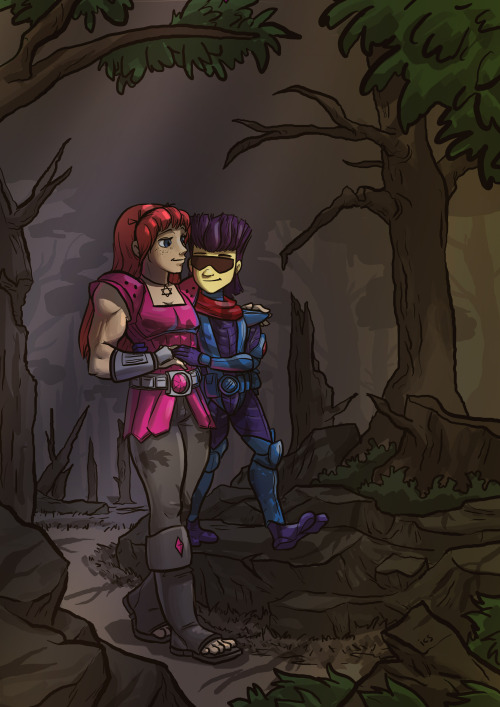
" Not only are my comics therapeutic for me, but my particular conditions (co-morbid depression and anxiety as well as autism) are essential to the creative process. At its core, underneath the convoluted narrative and superhero genre trappings, Ruby Nation is a story about how our physical and mental imperfections shape us, and how we are ultimately defined by our choices in response to such trauma and isolation. I’ve used the tag-line “Broken Heroes for a Broken World”, which could also describe many of the most enduring superhero characters. A key difference in my work, however, is that the characters have realistic handicaps to go with their fantastical ones; for example, Jiro himself is autistic in addition to having a largely cybernetic body and brain. I think it makes characters more complex and ultimately sympathetic to give them that kind of texture, as opposed to simply having fantastical angst-giving handicaps (for example, Cyclops of the X-Men has brain damage that prevents him from controlling his optic blasts, but that childhood head trauma manifests in no way other than forcing him to wear his visor and frequently whine about it) "

(Full article here)

Wednesday, September 4, 2013

That Time The Beast Lost His Brains

I do strongly recommend this as an enjoyable superhero story, my kvetching about the disability representation notwithstanding.

Finding disability studies-themed readings of comics is difficult, so if I'm to keep this blog around (and I want to do so), that's what I'll focus on. So without further adieu;

It's a common plot in any series where the hero has a superhuman ability, to take away that superhuman ability and force the hero to cope with being brought down to a normal level. For the superhero themselves, that's a disability (as disability itself is a social construct; the one-eyed man being king in the land of the blind, to use an old cliche), because their normal involves having that superhuman ability. Of course, the writers usually aren't aware that they're touching on any disability themes when they do these stories, even when they take the story to such extremes that it rings painfully true for some members of the audience with similar kinds of experience. Case in point: Hank "the Beast" McCoy's loss of intelligence in the late 80's X-Factor (original X-Men team) comics.

I'll keep the continuity mentions to the foot notes so that the meat of the essay will be as readily understandable as possible, even for non-comic readers. All you need to know about the story is a basic run-down of the Beast's history. He was born Hank McCoy, a mutant with superhuman strength, agility, and prehensile toes, as well as a super-genius intellect that contrasted his animalistic powers. In his adolescence Hank started his superhero career as an original X-Man, and later launched a solo career with a new, blue fur-covered look he acquired from foolishly testing a mutant extract potion on himself. After joining various superhero teams (including a few reunions with the X-Men), he eventually rejoined the original X-Men when they formed X-Factor*. In what appeared to be an effort to court original X-Men fans' nostalgia, Hank was kidnapped in the second issue by a mad scientist who tested an anti-mutant drug on him, which caused him to lose the fur (but not his strength).

Hank kept his passable-as-human look for a while, but encountered a cruel twist of fate when he was infected by a villain named Pestilence. Pestilence's plagues interacted with the earlier anti-mutant drugs to overactivate his immune system, causing his physical strength to increase exponentially with each exertion. However, every time Hank used his mighty muscles, he not only became stronger, but also stupider-- apparently his power was "drained from his mind", or some other such pseudo-scientific explanation, as though he were an RPG character who sacrificed the INT stat to boost the STR stat. Over the course of a single battle Hank went from a PHD bio-chemist with the strength of a gorilla to...effectively the Incredible Hulk, a brutish man-child with the strength to lift buildings but with a sub-normal level of cognition.
From a Fantastic Four tie-in issue, where Hank's brain damage was used to remind the deformed Sharon Ventura that she shouldn't complain because she still had her mind. The "Inspirationally Disadvantaged" trope, I suppose.

This kind of degenerative neurological condition would normally raise a lot of different questions. For example, what parts of Hank's brain were damaged by his over-active immune system? Was he losing basic cognitive processing power? Was he losing memories? Were his motor skills affected? Was the damage in terms of the "data" inscribed upon his grey matter, or was he actually causing physical injury to his head? And how far would Hank's intellectual deterioration progress? Would he end up in an animalistic state, or would he just become completely vegetative?

I had all these questions when I read these old issues for the first time. Unfortunately, none of them were answered. Instead, we got nearly a year's worth of comics where Hank was a bumbling dolt, while his teammates gave only token attempts to discourage him from further exerting himself. While the rest of the cast was in the midst of their own typical X-Drama, Bobby "Iceman" Drake made the only overt attempts to help Hank navigate the world, such as covering for him during TV interviews. Apparently nobody bothered to take Hank to a doctor, especially not a superhuman doctor like Reed Richards or Hank Pym (the kind of people who could actually do something).

Ultimately this strangely overlooked sub-plot was resolved in the most convenient way possible, when Hank was infected for a third time-- this time by a villainess named (appropriately) Infectia, who'd been dating Bobby so she could make him her super-powered love slave. When Bobby ignored Hank's warnings over Infectia's true agenda (thinking that Hank was too stupid to know anything about anything, even though anyone not thinking exclusively with their dick could've seen that a woman named INFECTIA was bad news), Hank jumped in and took a kiss from her meant for Bobby, which wreaked havoc with his physiology, but ultimately caused him to revert to his pre-X-Factor blue form, regain all his lost intelligence, and keep all the strength he'd gained**. (Somehow).

This story occurred during the critically acclaimed run of Louise Simonson and her husband Walt Simonson, on script and art respectively. Presumably the whole physiological rigamarole was a convoluted means to make the Beast blue and furry again. Unfortunately, it fell into the trope of the temporary disability-- the impairment that only lasts an episode/issue or two so the hero can learn a lesson. And even then, it's not clear that Hank really needed to learn anything. Was losing his intellect a punishment for the sin of pride in returning to his more attractive human form? Because other than appreciating the fact that he didn't look like the Cookie Monster with a Flock of Seagulls haircut anymore, Hank never showed any arrogance over his transformation-- largely because he was barely passable as human to begin with, forced to wear special footwear to suppress his huge, prehensile feet. Was this meant to show off his heroism, proving that Hank would sacrifice anything to do the right thing? I can buy that explanation, because it is a tremendous loss-- even though superheroes risk their lives on a daily basis, lives mean less to most people than their reputations and their legacies. Especially for one of the world's sharpest minds, and one of the few mutants to enjoy public celebrity not tied into international terrorism, to be reduced to Benjy from the Sound and the Fury.


Hank inelegantly blubbering to reporter Trish Tilby, who actually started to become romantically interested in Hank here-- to the point where she was alarmed when he returned to being a hyper-intellectual blue ape. They still dated for years, until Hank further mutated into a giant blue lion in Grant Morrison's run. Being a giant cat seems an arbitrary place for her to draw the line.

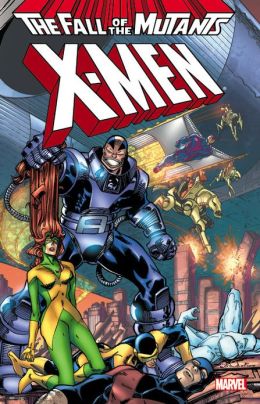
It's genuinely heart-wrenching to see how hard Hank has it with such limited brain power, especially in a scenario where the villain Apocalypse tricks Hank into sending a giant spaceship crashing into New York. And it's moving to hear Hank say that he'll do whatever he can to put things right, even if he loses what little mind he has remaining. But ultimately the story ignores the intellectual disability and all the loaded implications therein, because Hank's intellectual degradation is immediate, plateaus at the level of the Savage Green Hulk, and mostly just keeps him in the background of the main storylines. The Fall of the Mutants is considered a seminal work in the X-Canon, but how many people remember it for the master plans of Apocalypse and the rebirth of Angel as the brainwashed, metal-winged Archangel? And how many remember it for Poor Dumb Hank? Besides me, of course.

*(The original X-Factor consisted of the original X-Men pretending to be a human anti-mutant agency, promising to "control" the mutant threat while secretly rescuing and training young mutants. As many noted before me, this was the stupidest fucking premise ever for an X-Book, because the anti-mutant PR did so much harm that the few mutants X-Factor helped under their cover didn't begin to make up for it. Thankfully, the Simonsons gradually did away with this premise, and by the end of this particular storyline, X-Factor outed themselves to the public-- with surprising and well-deserved public adulation for saving the city from Apocalypse.)
** (Of course, it was soon forgotten that Hank still had that boosted strength, probably because he was really damned strong already).

Sunday, June 30, 2013

Comics, Cats, and 'Casts: Stuff I've been Up To

It's been a while since I've posted here, and I apologize for that. In addition to my regular job, I've had plenty of activities, such as the following comics from Ruby Nation;

http://www.therubynation.com/comics/1749042/bizarre-post-human-biology/
http://www.therubynation.com/comics/1753690/male-bonding/
http://www.therubynation.com/comics/1757607/college-planning/
http://www.therubynation.com/comics/1766514/human-hearts-post-human-biology/

As well as all of my cat comics at Poet Kitties, including this favorite of mine;

http://www.poetkitties.com/comics/1752373/criminal-balzac-cat/

And best of all, my podcast with Up Up and Away's Siike Donnelly on the topic of Superman, where I discuss bullies, memes, Ruby, and Grant Morrison among other things;

http://www.blogtalkradio.com/nerdnation/2013/06/12/up-up-and-away--episode-3

Enjoy!

Friday, May 17, 2013

And More Of Why I Hated Iron Man 3

(Reposted from my comic blog, which you should be reading. My feelings a week later have only gotten harsher.)


Some days I am very grateful for the fact that I do an independent webcomic, with no content beyond what I create, no editing beyond what I choose, and no readers beyond a small few devoted and cherished fans. Yesterday was one of those days, because it was the day I finally saw Iron Man 3.

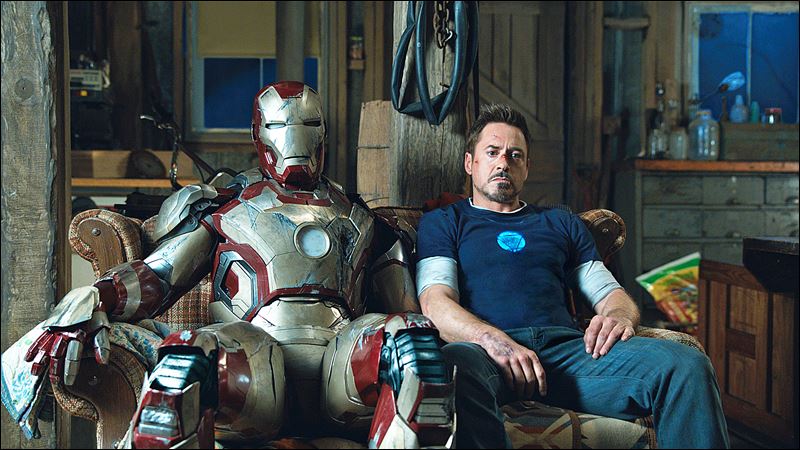
Iron Man 3, directed by Shane Black (replacing Jon Faverau), is not a bad movie. It has the same cast of the previous Iron Man movies (which I really enjoyed, albeit with reservations), and it had a few new characters who were played effectively. It even had some good ideas, such as Tony Stark's anxiety attacks following the events of the Avengers. However, none of those ideas got any space to breathe, and the Hollywood formula smothered the movie so that everything potentially interesting about it was diluted in a stream of explosions and one-liners.

If Iron Man 3 were played as a completely straightforward superhero movie, such as Captain America, it could've excelled at that. But the more thoughtful bits raise important questions and take them absolutely nowhere. Tony's anxiety attacks begin as a serious issue, showing a tortured mind whose view of a rational universe has been shattered in the wake of discovering gods and aliens, and who builds armor after armor in a compulsive attempt to regain his security. This is in the first act; in the second act, Tony's anxiety attacks are just reduced to comic relief as he flips out in front of a little kid, and by the third act, he's completely "overcome" them (as if you can just punch emotional problems into oblivion). 

(NOTE: EXPLICIT SPOILERS FOLLOW)

The intriguing start and piss-poor payoff continues through the rest of the movie. For example, the Mandarin is brought in as a Bin Laden-style terrorist, releasing viral videos of his deeds with messages about America's sins (SUCH AS A REFERENCE TO THE SAND CREEK MASSACRE, as an allegory for the casualties of America's nation-building in Iraq). In the second act, we see that this new interpretation of the Mandarin is just a smokescreen, as he's really just an actor hired by the main villain to distract from his real activities. This is a clever twist that plays on Orientalist fears, but it's ruined by some painfully extended comic relief sequences with actor Mandarin, and then it's completely dropped when the real villain turns out to be just another monologuing jackass, whose speech about the power of anonymity is completely ruined by the fact that he's GIVING A FUCKING SPEECH. What's more, the present-day implications of the genocide against the indigenous Americans are completely dropped, even when there's plenty of appropriate subtext (such as Jim Rhodes/War Machine going on a wild goose chase for the Mandarin while in his new Iron Patriot suit, giving third-world citizens the sight of a red-white-and-blue death machine breaking into their homes and threatening them without warning).

Everything in the movie follows this pattern. The Extremis formula, used in the comics for an interesting exploration of transhumanism (as well as its inventor Maya Hansen, a great example of a once-idealistic scientist corrupted by the military-industrial complex), just serves to make flaming villains here. Tony's compulsive armor-building, a sign of emotional turmoil, turns out to be just the thing needed to save the day in the Obligatory Climax Explosion Orgy. Even the humor scenes fail, because of how scripted they feel. Where Jon Favreau made even the weaker parts of his Iron Man movies entertaining thanks to all the ad-libs, you can tell here that there's a heavier directorial hand, and the situations (such as all the time where Tony fixes his armor with the help of the little kid) show us just how tightly they're sticking to the script and telling us THIS IS FUNNY.

It's all smothered by cliches, robbing it the opportunity to be even an interesting failure. It's not a bad movie, and I don't hold anything against its cast and crew. It's just a mediocre movie clearly ruined by the process of executive meddling, and again, it makes me very grateful I don't have to deal with that shit.

Comic Book Iron Man Vs. Movie Iron Man in the Most One-Sided Fight Ever

(Having a blog devoted to my artist brand didn't work out, so I'm going back to what works; this blog, and writing about things bigger than me)


Overall, the comic version of Iron Man is one of the few superheroes who represents an adult morality, as opposed to an adolescent or even childish one. Tony is a complex man with enough power and influence that everything he does or doesn't do has massive ramifications, and he's fully aware of that fact. His goals are much greater than simply saving the world from villains, so his enemies tend to come across as petty characters despite their destructive capabilities, who are threatened by the fact that Tony can be fiscally successful without Ayn Rand-style opportunism. Even then he's often forced to make hard decisions and do morally ambiguous things, because he's responsible for so many people-- not just in the present, but in the future. Tony Stark's personal problems tend to similarly represent more complex emotional territory than most superheroes, since his fight to lead mankind away from their bad habits towards better choices is represented in his own struggles with addiction (be it alcohol, women, or even just the desire to control everything).

The movie version of Iron Man is less abstract because he's a much simpler and shallower character. He is an overgrown teenager whose activities all stem from what he wants, with the only cases of him actually doing anything altruistic are ultimately self-serving, such as the Stark Expo (which shows no actual inventions, just a vanity project with a lot of sound and fury), or the compulsive armor building (which is just a means of managing his own insecurities with just as much potential for ill as good). Note how all the times Tony actually goes into combat in the movie, it's either a matter of self-defense or vengeance (even in the first movie, he only goes after the terrorists in Yinsen's village). This might be interesting if he were not portrayed as the hero, but instead he's immediately forgiven for his sins because the films demand happy endings. 

If the comic is being rejected, it's being rejected in favor of a sugary Hollywood iteration who can easily overcome his problems to suit the three-act screenplay structure, so that they don't get in the way of the power fantasy that can't hold up to a world of abstractions.

Saturday, March 9, 2013

The Ruby Nation Manifesto: All My Blogging Goes Here Now

http://therubynation.blogspot.com

Content will be largely similar, albeit with a bit less bitching, but I wanted to do a daily blog and I wanted to tie it directly into my comic work, so I'm going to write many, many more posts of a shorter nature on there. Please follow me there.

Monday, December 31, 2012

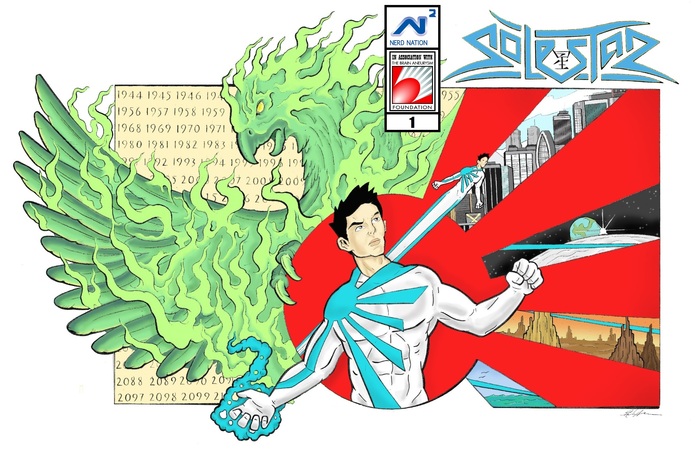
Solestar: Support The Greatest Comic Of 2013!


If there's one comic I'm most excited for in the coming year, it's Solestar. It's currently in the Kickstarter phase, but it deserves your attention and your support.

Writer/creator Siike Donnelly is a friend of mine, who I met first on Facebook and later in person at Golden Apple Comics in Los Angeles. Siike is a survivor of a brain aneurysm, a cerebral eruption that left him severely debilitated. Despite this, he's managed to relearn basic functions that most of us take for granted, such as walking and talking. He's also kept very active in the comics community, having written a few novels, doing a regular Nerd Nation podcast with Gene Hoyle , adopting an adorable stray dog named Echo, and even doing some real-life superheroing.

Usually discussions of people "overcoming" disability are incredibly patronizing, treating the disabled subject as an object of pity, and using the narrative to shame able-bodied/minded people in a way that has the opposite effect (i.e. "this person can't walk but has done so much with their life, therefore you should be able to do even better than this cripple"). They also tend to gloss over the actual challenges of disability by treating them like a super-villain that can be conquered. I'm trying to avoid that here, because I know that Siike struggles on a daily basis, and lives with a lot of pain. His many achievements do not lessen what I know he has to endure, but they do show a man who's become much stronger than most for his hardships. I believe the two defining characteristics of any person are their compassion and their willpower, both of which transcend any physical or cognitive difficulties. Siike has plenty of both.

And Solestar is the culmination of Siike's achievements, a story about a superhero's final days. It's a charity project for the Brain Aneurysm foundation, with all proceeds helping that organization and by extension the people who have suffered that insidious condition. It started as a pitch for a Superman story, but was later reworked into an original character's saga, and came out even stronger for it. And it's got artwork by over 60 people, including yours truly. (Siike gave me a script for a page that was written to my talents, so expect to see a lot of kitties doing kitty things). The artist roster has a wide array of men and women, all of them with unique abilities but each bringing their own voice to the project. There are even some big names in the mix, such as Bill Morrison of Bongo Comics, Sean "Cheeks" Galloway, and Ninja Turtles co-creator Kevin Eastman.

I've read part of the script for this and really want Solestar to be published. Solestar is co-titled "the Naive Project", due to the inherent naiveté of trying to change the world with art and comics. But it's only naive if we let it be naive. Please consider adding some funds to the Kickstarter to bring Siike's story to the entire world.

Here's the link once again.

Thursday, December 27, 2012

Sunday, December 16, 2012

You're Not Adam Lanza's Mother, You're Just Awful

The entire nation is having difficulties fathoming the events at Sandy Hook Elementary, where a man murdered 27 people (several of whom were little children) with semi-automatic and automatic weapons.  Many are simply speechless, unable to fathom such an insidious act against innocents. Many are very vocal, saying "never again" to a culture who worships guns and makes them so accessible despite all the casualties they facilitate. And, inevitably, some people are using this opportunity to draw attention to themselves. In the case of the so-called "Anarchist Soccer Mom", it's at the expense of her child.

Like too many blogs of mothers who have special needs children, ASM goes on about how hard her life is and how horrible her mentally disabled child is, taking her entire experience and distilling it into a sob story. A critical reader might see two sides to this story, because even if ASM's child is prone to violent outbursts, he's also the victim of a mother who tries to control every aspect of his life down to the color of pants he wears. (She doesn't believe her son belongs in jail, but constant meetings with social workers, an admitted slew of heavy duty medications, and an accelerated school with a heavily restrictive focus are all okay?). However, her position is sympathetic under the circumstances-- or would be, were it not for this line...

"I am sharing this story because I am Adam Lanza’s mother. I am Dylan Klebold’s and Eric Harris’s mother. I am James Holmes’s mother. I am Jared Loughner’s mother. I am Seung-Hui Cho’s mother. And these boys—and their mothers—need help. In the wake of another horrific national tragedy, it’s easy to talk about guns. But it’s time to talk about mental illness."

This woman, on a public forum where her real name isn't entirely concealed, compared her child to various mass-murderers who launched pre-meditated plans to murder scores of innocents. Never mind the fact that she admits her son is very personable when he's not in a meltdown state. Or that his worst actions are entirely irrational-- violent kicking and screaming, without the intellectual clarity one would need to successfully aim a firearm. No, her child's pathological defiance makes him the same as the kind of truly evil person who would go through with such a plan.

Her idea of talking about mental illness means stigmatizing everyone who looks like they could be dangerous (whether they are or not), putting them under constant surveillance, and prohibiting them from stepping out of line even slightly-- even if stepping out of line raises a reasonable objection. ASM says she wants God to help us all, especially her son. It seems more likely she wants God to strip her child of his free will, so he cannot object to her-- violently or otherwise. 

It may be easy to talk about guns (getting the small men in power to let go of their large assault weapons being another story), but guns are inanimate objects that can be subject to stringent regulation. Human beings can't be controlled so easily, nor should they. And if you compare your child to a violent killer, you're giving him reasons to actually become a violent killer-- if even his own family won't treat him like a human being.

Fuck you, Anarchist Soccer Mom.

Sunday, December 2, 2012

Matt Fraction Iron Man Retrospective: That's It? Hell Yeah It Is


Genre fiction tends not to be the place for subtle, complex emotions. With names like comedy, suspense, drama, and horror, genres in their purest form tend to cater to simpler desires, evoking simple yet visceral emotions if done well. This isn't a bad thing, as that's hard to do in practice and should be lauded when done successfully. However, the best works are the ones that augur more complex feelings, put you in emotional places that are all too real but rarely discussed in our fictional fantasies. This is the difference between, say, anger at a designated foe, and pervasive frustration over a lack of personal progress. A dramatic collapse into addiction followed by a heroic triumph of willpower, versus a realization that those compulsions have just been sublimated into other areas. Or even the difference between a triumphantly happy ending, and an ending where the hero left the world slightly better than he found it-- but only slightly.

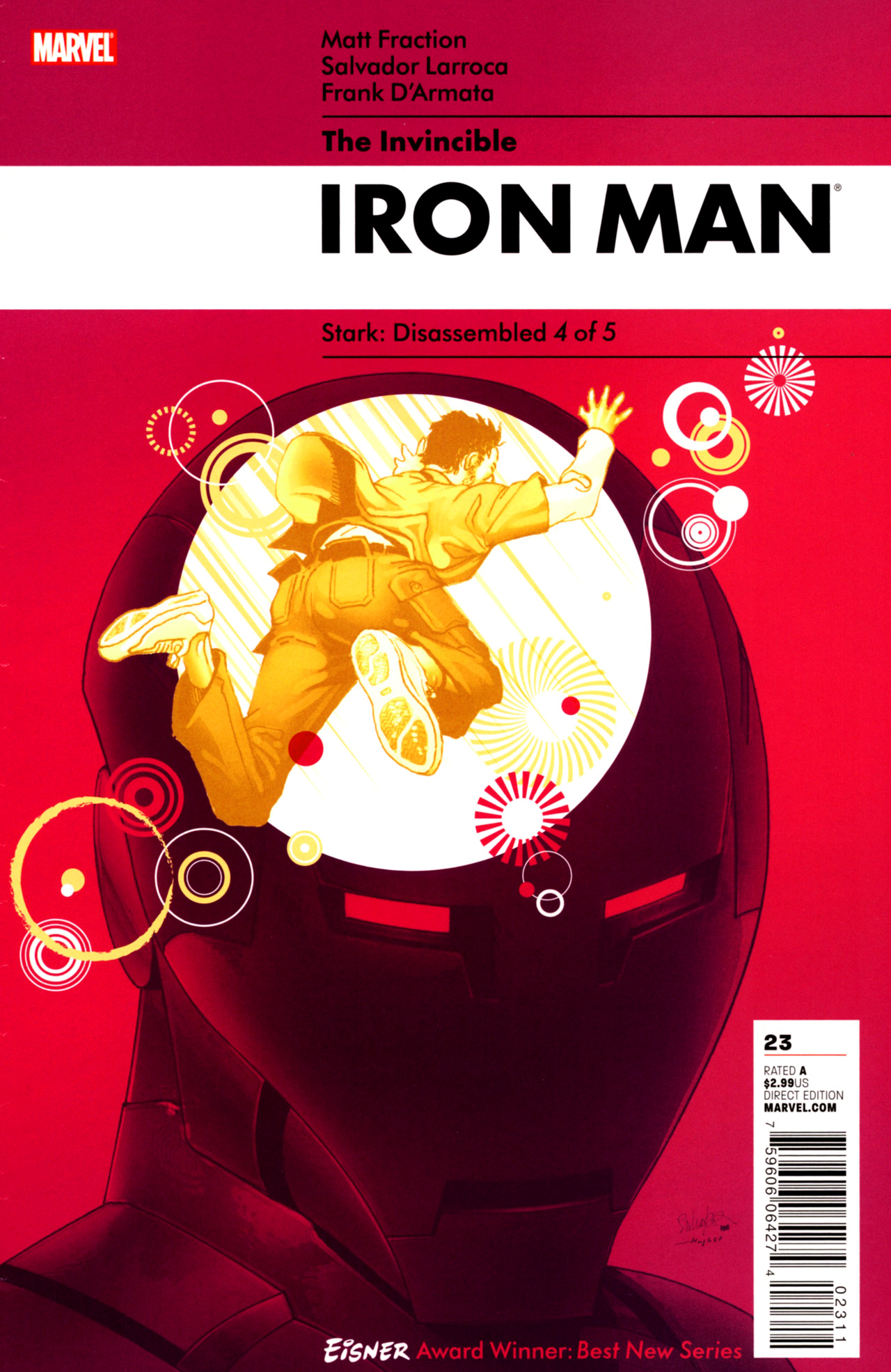
Matt Fraction has been doing this with artist Salvador Larroca* on the Invincible Iron Man for four and a half years, taking the character into emotional territories seemingly beyond the scope of the superhero genre. As of October 2012, Fraction finished his tenure on the book with a surprisingly downbeat epilogue. After a penultimate issue of all action, where Iron Man teamed up with pretty much every non-Avenger ally available (and even some enemies) to stop the Mandarin, Tony returned to America after months in his arch-enemy's captivity. What Tony concludes, to his dismay, is that the world hasn't changed much in his absence, still stuck in the past.

Actually, that's not quite true; Tony's friends and colleagues were doing okay without him. Resilient, previously Stark Resilient, became fairly successful without its mega-celebrity founder, using the repuslor technology to make superior consumer goods without a single cent of military funding.Pepper Potts moved on with her life, eventually hooking up with dowdy but reliable Carson Wyche (one of Resilient's star inventors, whose career had previously been ruined by Tony during his decadent and petty pre-Iron Man days) and learning to live without the Rescue armor. The civilian works of Tony Stark continued without him or Iron Man-- his real legacy. But that's not something that Tony can really appreciate, so the only person really stuck in the past is him. Tony's company escaped the Marvel Universe's Nietzche-esque eternal recurrence, and are off doing good if rather dull work by making better, cleaned products that are presumably cheaper. But Tony is stuck in the same cycles of heroes and villains and will never escape them, thanks to the fact that his existence as a Marvel comic character is meant to sell merchandise first.**

The main theme of Fraction's run on Iron Man is the explicit question of wether or not the Iron Man is a good thing. Sure, Tony saves the world as Iron Man, but there are plenty of other superheroes who do that without all of Tony's baggage; who don't sponsor their super-powers with military-industrial blood money, who aren't responsible for thousands of civilian deaths at the hands of Stark weapons, and who aren't so wealthy that they can retreat into their addictions while shirking their responsibilities. Some might even say that Tony's decision to atone for his arms dealing sins as Iron Man served him far more than anyone else, giving him the visceral thrill of being a superhero and catering to his death drive impulses, instead of really cleaning up the Stark-branded messes left on battlefields across the world.

This theme was much easier for Fraction to express at the start of his run, when Tony was the Orwellian ruler of the world as Director of SHIELD. When Tony relapsed into the military-industrial complex full force after the events of Civil War, it was much easier to critique the problems in his imperialistic approach. The first twenty-four issues of the Fraction/Larroca Iron Man fired upon all cylinders, especially during Tony's atonement in World's Most Wanted (which kick-started the Handi-Capable blogging, as some of you may remember). After that it was more uneven, since the Heroic Age led to Tony Stark trying for a more pacifistic approach, which really wasn't condusive to serial superhero comics. (The Stark Resilient arc was particularly egregious, with its first half being entirely set-up for Tony's new company.)

Of course, that may have been the point, because a lot of life-- particularly recovery from addiction-- isn't earth-shattering drama. It's living day-by-day, paying your bills, managing your relationships, and trying to do a little better than you did the previous day. And this doesn't really work for Tony Stark, who risks his life on a daily basis and goes through more women than James Bond. In many ways, Tony still lives an addict's life, even if he's kept himself clean of alcohol; he lives a life of consumption, keeps others at arm's length, is frozen at the emotional maturity of a teenager, and doesn't place any value on his personal safety.*** This isn't really the kind of person you want as a responsible leader for a trusted brand, and when Tony fails, his companies tend to fail with him.

The final chapters, however, did have Tony save the day when nobody else could, by ultimately defeating the Mandarin-- who was quite cleverly played as a twisted mirror of Tony's own conspicuous consumption, a Kim Jong Il-style**** hedonist so obsessed with his self-mythology that he became enslaved by it (what with the rings actually controlling him). Just like in real life, weapons are a necessary evil some times, when you need to defend the just and the innocent. But Iron Man is still a weapon, and tying worship of weapons into the public sphere has grave moral consequences, as Eisenhower (correctly) warned. So this makes the ending, with Tony leaving his company and going off to find new adventures in space, an appropriate if bittersweet conclusion.

One of Tony's final lines to his former employees is "I'll do better next time". So much of fiction deals with character development in very broad strokes, either ignoring it or having characters Learn Lessons and Grow Stronger. Tony isn't a completely different person after all of his experiences in Fraction's stories, nor can one expect him to be. Nor is Resilient poised to dramatically change the world, in the broad "curing cancer and making cars fly" strokes too often shown in science fiction "utopias". They make cleaner cars and cleaner phone batteries. They're helping people live life a little better, and they're offering it to the public in a completely voluntary fashion; you don't choose a Stark phone because of a Dr. Doom-like edict sweeping society, you presumably choose it because it's just a better phone. The world is thus a little better, from this small bit of progress-- which is ultimately the best we can hope for in terms of lasting good. Humans and their societies can't change overnight, nor can they become perfect-- they can just move in the right direction, and that's what Tony's done.

It's a complicated message for a superhero comic, but a very powerful one when fully understood. I'm really going to miss Matt Fraction on Iron Man, and despite some misgivings about certain parts of this story, I have nothing but praise for the sum of those parts.

* Larroca's art deserves special mention, as he became better and better with each issue. His tech is always beautiful and inventive, but his characterizations are also superb; though he's often critiqued for relying too much on photo reference, his art uses such economy of line that those faces get life beyond their original inspiration. I'm going to buy the new Cable and X-Force comic just for his art. And Colossus, of course.
** Which isn't really a bad thing, it just is. This is also why creators who do such brilliant things with the franchise characters deserve special applause.
*** Illustrated beautifully in the .1 issue, where Tony recounts his entire history in the context of an Alcoholics Anonymous meeting. If you buy a single issue of Fraction's run, buy Invincible Iron Man 500.1
**** Which is why for a moment I was disappointed that Ben Kingsley was cast as the Mandarin in Iron Man 3, because I would've gone with the Kim Jong Il puppet from Team America World Police :P