Showing posts with label crap. Show all posts
Wednesday, December 25, 2013
Friday, May 17, 2013
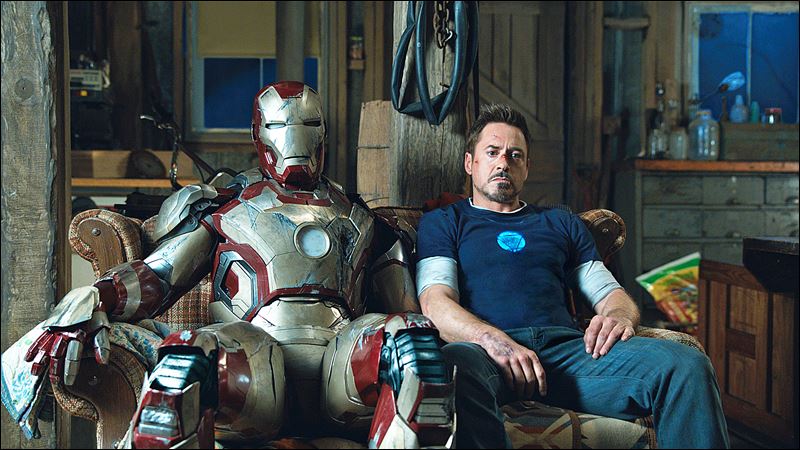
And More Of Why I Hated Iron Man 3
(Reposted from my comic blog, which you should be reading. My feelings a week later have only gotten harsher.)
Some days I am very grateful for the fact that I do an independent webcomic, with no content beyond what I create, no editing beyond what I choose, and no readers beyond a small few devoted and cherished fans. Yesterday was one of those days, because it was the day I finally saw Iron Man 3.
Iron Man 3, directed by Shane Black (replacing Jon Faverau), is not a bad movie. It has the same cast of the previous Iron Man movies (which I really enjoyed, albeit with reservations), and it had a few new characters who were played effectively. It even had some good ideas, such as Tony Stark's anxiety attacks following the events of the Avengers. However, none of those ideas got any space to breathe, and the Hollywood formula smothered the movie so that everything potentially interesting about it was diluted in a stream of explosions and one-liners.
If Iron Man 3 were played as a completely straightforward superhero movie, such as Captain America, it could've excelled at that. But the more thoughtful bits raise important questions and take them absolutely nowhere. Tony's anxiety attacks begin as a serious issue, showing a tortured mind whose view of a rational universe has been shattered in the wake of discovering gods and aliens, and who builds armor after armor in a compulsive attempt to regain his security. This is in the first act; in the second act, Tony's anxiety attacks are just reduced to comic relief as he flips out in front of a little kid, and by the third act, he's completely "overcome" them (as if you can just punch emotional problems into oblivion).
(NOTE: EXPLICIT SPOILERS FOLLOW)
The intriguing start and piss-poor payoff continues through the rest of the movie. For example, the Mandarin is brought in as a Bin Laden-style terrorist, releasing viral videos of his deeds with messages about America's sins (SUCH AS A REFERENCE TO THE SAND CREEK MASSACRE, as an allegory for the casualties of America's nation-building in Iraq). In the second act, we see that this new interpretation of the Mandarin is just a smokescreen, as he's really just an actor hired by the main villain to distract from his real activities. This is a clever twist that plays on Orientalist fears, but it's ruined by some painfully extended comic relief sequences with actor Mandarin, and then it's completely dropped when the real villain turns out to be just another monologuing jackass, whose speech about the power of anonymity is completely ruined by the fact that he's GIVING A FUCKING SPEECH. What's more, the present-day implications of the genocide against the indigenous Americans are completely dropped, even when there's plenty of appropriate subtext (such as Jim Rhodes/War Machine going on a wild goose chase for the Mandarin while in his new Iron Patriot suit, giving third-world citizens the sight of a red-white-and-blue death machine breaking into their homes and threatening them without warning).
Everything in the movie follows this pattern. The Extremis formula, used in the comics for an interesting exploration of transhumanism (as well as its inventor Maya Hansen, a great example of a once-idealistic scientist corrupted by the military-industrial complex), just serves to make flaming villains here. Tony's compulsive armor-building, a sign of emotional turmoil, turns out to be just the thing needed to save the day in the Obligatory Climax Explosion Orgy. Even the humor scenes fail, because of how scripted they feel. Where Jon Favreau made even the weaker parts of his Iron Man movies entertaining thanks to all the ad-libs, you can tell here that there's a heavier directorial hand, and the situations (such as all the time where Tony fixes his armor with the help of the little kid) show us just how tightly they're sticking to the script and telling us THIS IS FUNNY.
It's all smothered by cliches, robbing it the opportunity to be even an interesting failure. It's not a bad movie, and I don't hold anything against its cast and crew. It's just a mediocre movie clearly ruined by the process of executive meddling, and again, it makes me very grateful I don't have to deal with that shit.
Some days I am very grateful for the fact that I do an independent webcomic, with no content beyond what I create, no editing beyond what I choose, and no readers beyond a small few devoted and cherished fans. Yesterday was one of those days, because it was the day I finally saw Iron Man 3.
Iron Man 3, directed by Shane Black (replacing Jon Faverau), is not a bad movie. It has the same cast of the previous Iron Man movies (which I really enjoyed, albeit with reservations), and it had a few new characters who were played effectively. It even had some good ideas, such as Tony Stark's anxiety attacks following the events of the Avengers. However, none of those ideas got any space to breathe, and the Hollywood formula smothered the movie so that everything potentially interesting about it was diluted in a stream of explosions and one-liners.
If Iron Man 3 were played as a completely straightforward superhero movie, such as Captain America, it could've excelled at that. But the more thoughtful bits raise important questions and take them absolutely nowhere. Tony's anxiety attacks begin as a serious issue, showing a tortured mind whose view of a rational universe has been shattered in the wake of discovering gods and aliens, and who builds armor after armor in a compulsive attempt to regain his security. This is in the first act; in the second act, Tony's anxiety attacks are just reduced to comic relief as he flips out in front of a little kid, and by the third act, he's completely "overcome" them (as if you can just punch emotional problems into oblivion).
(NOTE: EXPLICIT SPOILERS FOLLOW)
The intriguing start and piss-poor payoff continues through the rest of the movie. For example, the Mandarin is brought in as a Bin Laden-style terrorist, releasing viral videos of his deeds with messages about America's sins (SUCH AS A REFERENCE TO THE SAND CREEK MASSACRE, as an allegory for the casualties of America's nation-building in Iraq). In the second act, we see that this new interpretation of the Mandarin is just a smokescreen, as he's really just an actor hired by the main villain to distract from his real activities. This is a clever twist that plays on Orientalist fears, but it's ruined by some painfully extended comic relief sequences with actor Mandarin, and then it's completely dropped when the real villain turns out to be just another monologuing jackass, whose speech about the power of anonymity is completely ruined by the fact that he's GIVING A FUCKING SPEECH. What's more, the present-day implications of the genocide against the indigenous Americans are completely dropped, even when there's plenty of appropriate subtext (such as Jim Rhodes/War Machine going on a wild goose chase for the Mandarin while in his new Iron Patriot suit, giving third-world citizens the sight of a red-white-and-blue death machine breaking into their homes and threatening them without warning).
Everything in the movie follows this pattern. The Extremis formula, used in the comics for an interesting exploration of transhumanism (as well as its inventor Maya Hansen, a great example of a once-idealistic scientist corrupted by the military-industrial complex), just serves to make flaming villains here. Tony's compulsive armor-building, a sign of emotional turmoil, turns out to be just the thing needed to save the day in the Obligatory Climax Explosion Orgy. Even the humor scenes fail, because of how scripted they feel. Where Jon Favreau made even the weaker parts of his Iron Man movies entertaining thanks to all the ad-libs, you can tell here that there's a heavier directorial hand, and the situations (such as all the time where Tony fixes his armor with the help of the little kid) show us just how tightly they're sticking to the script and telling us THIS IS FUNNY.
It's all smothered by cliches, robbing it the opportunity to be even an interesting failure. It's not a bad movie, and I don't hold anything against its cast and crew. It's just a mediocre movie clearly ruined by the process of executive meddling, and again, it makes me very grateful I don't have to deal with that shit.
Labels:
anxiety disorder,
crap,
disability,
disney,
handicapeable,
im3,
iron man,
iron man 3,
marvel,
neil kapit,
ptsd,
shane black,
sucky movies,
tony stark
Friday, April 13, 2012
Chris-Chan Loses Virginity, Cosmic Order Somehow Survives
I've largely stopped covering Chris-Chan's antics on this blog, partly because he hasn't done much comic-related stuff in the past few years (with his saga now focused more on his real-life antics and the constant troll surveillance that lets us see all his failings), but mostly because I didn't want to give people the wrong idea about why he's so hilarious. I wanted to make clear that autism has no more to do with his unique lifestyle and personality than anything else, be it his sheltered upbringing, his inflated ego, the trolls manipulating him into getting wackier and wackier, or his general fear of change. Unfortunately, that doesn't seem to have any effect on people who still use autism as an insult against him, especially since Chris-Chan seems to determined to perpetuate his identity as a " high-functioning autistic " (and thus, shaming everyone on the autism spectrum).
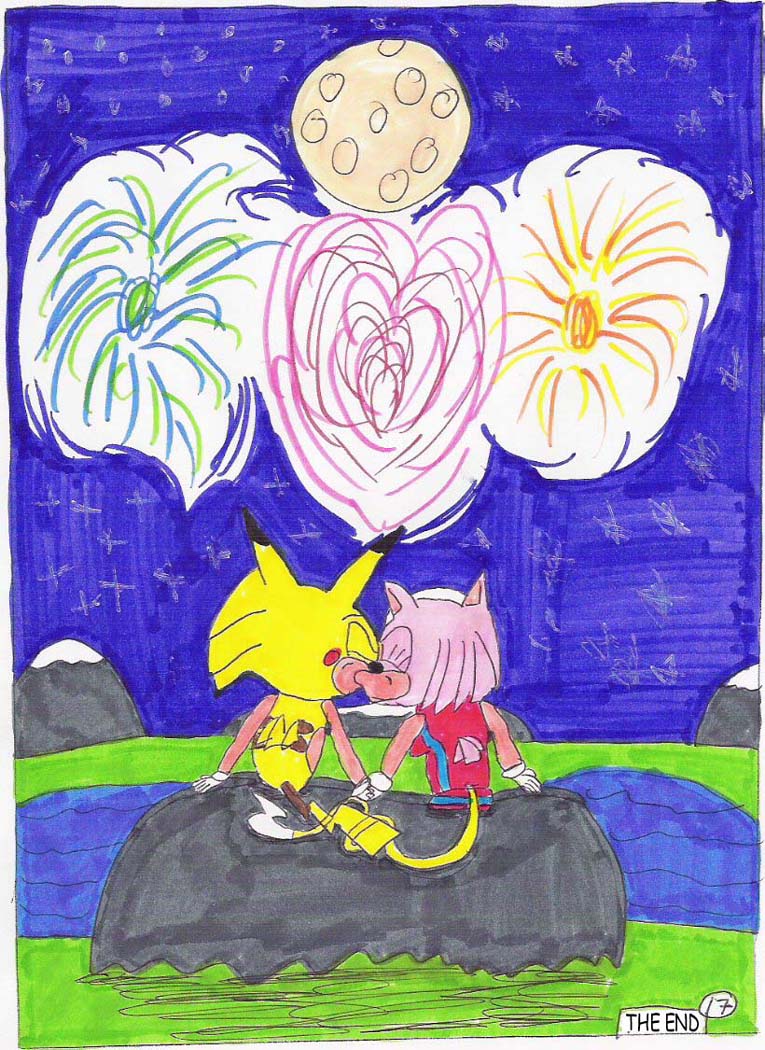
Still, there is something that might be big news for those still following Chris-Chan's saga; he finally lost his virginity. Since most of his antics were motivated by his Love Quest, the desire to find a woman that fits his criteria (re: the body of a Barbie doll with the mind of his mother), this means that the great saga of his life up until now is over. No longer is he a virgin with rage. However, Chris-Chan clearly didn't get a girlfriend, but a call girl with an all-time record in low standards. The comments about her being in her early-20's, praising him for being "bigger" than her last hook-up, and that he won't tell everyone the details except his "Sweetheart-to-Be" (who I presume is Jackie Romy, the poor girl) suggests that it was a one-time hookup. And since he's Chris-Chan, a pock-marked obese balding thirty-year-old who dresses like a fifteen-year-old girl, I assume it had to involve a large financial gain on her part, out of the pocket of the State of Virginia.
All this proves is that virginity and maturity have no correlation.
Chris-Chan didn't "achieve" anything by having sex for the first time. He is no more of a man than he was before, by which I mean a horribly egocentric and depraved man-child. He's probably even less of a man, because he spent money that could've gone towards something useful on what he calls "China". There is no shame being an older virgin, but there is plenty of shame in talking about it constantly, harassing women at every corner, and becoming internet-famous with a largely plagiarized webcomic in order to get laid (the most misguided attempt at becoming desirable in human history).
Of course, there's also the possibility that he just made the whole thing up, making the whole situation even more pathetic. Even so, unless he goes down the prostitution route again (or for the first time), Chris-Chan's only sexual outlet will remain the horrible BDSM marriage of Sonichu and Rosechu.
Friday, March 16, 2012
Change Your Tights: Comics Without Frontiers on Superheroes and Drama
While it might not exactly be praise, it was flattering to see my earlier post about superhero fans fearing bad things happening to their favorite characters referenced by Miguel of Comics Without Frontiers. Miguel's blog is always great, thought-provoking reading, but this is an especially good piece.
The just of Miguel's post is a comparison between the drama of Mutant Massacre (one of my favorite comics of all time) and the drama of Fear Itself (the absolute height of mediocrity, without even the entertaining terribleness of Ultimates 3 or Cry for Justice). THere are many great points here, especially the observation that the Avengers never remove their costumes in Fear Itself. They're in their tights the whole mission, without showing any life outside of their battles and missions. You'd figure they'd at least change clothes to ward off the inevitable jock itch of sweaty spandex/leather/latex/armor.
I remember Mark Millar, when he was doing the Ultimates, commenting how he didn't like when Iron Man attended social functions in full armor. This is clear from the Ultimates series, where Tony (and the rest of the cast for that matter) spend as much time in their civvies doing normal-person things as they do on the battlefield in their action suits. Unfortunately, Millar fell victim to the no-life-outside-tights problem in Civil War, where most of the characters just hang around in their tights the whole story, and tense meetings have their drama undercut by the fact that characters are wearing their bird/bee/banana yellow wolverine costumes.
Labels:
comic book industry,
comics without frontiers,
crap,
marvel,
miguel,
superheroes
Saturday, February 4, 2012
Another Reason Why Before Watchmen Should NOT Exist: It'd Dated Already
*
There are a hundred and one reasons why DC shouldn't go forward with Before Watchmen, the controversial series of prequels to the superhero genre's Citizen Kane. I've heard plenty of discussion about the continuing disrespect towards the original creators, the fact that few if any creators could measure up to the originals, the fact that there's no more story to tell with the characters, etc. However, one thing about which I haven't heard much discussion is the series' timeline.
Watchmen not only debuted in the 1980s, but was entirely about the 1980's. Alan Moore and Dave Gibbons created an alternate timeline leading to an alternate 1985. The plot is set against a Cold War gone hot, with the Russians poised to nuke America. The characters' origins are rooted in the Great Depression for the first generation, and the Vietnam era for the second. Rorscach's hero is Harry Truman, for God's sakes.
Most of the most successful comic book characters are from eras long past, and even further into the past than Watchmen. But those characters weren't given backstories as rooted to history, and they benefitted from regular updates and revamps (such as moving Iron Man's origin story to the war du jour, or modifying Captain America's history to make him a man out of time). Since we aren't getting an Ultimate Watchmen, we're instead getting more stories set in the deep past, exploring characters whose conclusions are foregone against a backdrop unfamiliar to a modern audience.
This is not an indictment of historical fiction or even of prequels, but rather an indictment of the bean counters at DC for bringing this wretched project to light. They've courted a lot of hate from fans, and for what? Prequels exploring the historical minutae of a twenty-five-year-old story that really doesn't need it? Even if Watchmen is a classic known to people who don't regularly read comics, classic is inherently dated. And unless Before Watchmen includes some miraculously innovative take on the material that already exists**, it's going to be an inherently limited and superfluous exercise with little profit beyond the short-term.
* (Image Found On Internet)
** (Grant Morrison's Multiversity would have been this, because Morrison's talent as well as his outspoken distaste for Watchmen made him one of a handful of creators who could actually make something of this doomed idea.)
There are a hundred and one reasons why DC shouldn't go forward with Before Watchmen, the controversial series of prequels to the superhero genre's Citizen Kane. I've heard plenty of discussion about the continuing disrespect towards the original creators, the fact that few if any creators could measure up to the originals, the fact that there's no more story to tell with the characters, etc. However, one thing about which I haven't heard much discussion is the series' timeline.
Watchmen not only debuted in the 1980s, but was entirely about the 1980's. Alan Moore and Dave Gibbons created an alternate timeline leading to an alternate 1985. The plot is set against a Cold War gone hot, with the Russians poised to nuke America. The characters' origins are rooted in the Great Depression for the first generation, and the Vietnam era for the second. Rorscach's hero is Harry Truman, for God's sakes.
Most of the most successful comic book characters are from eras long past, and even further into the past than Watchmen. But those characters weren't given backstories as rooted to history, and they benefitted from regular updates and revamps (such as moving Iron Man's origin story to the war du jour, or modifying Captain America's history to make him a man out of time). Since we aren't getting an Ultimate Watchmen, we're instead getting more stories set in the deep past, exploring characters whose conclusions are foregone against a backdrop unfamiliar to a modern audience.
This is not an indictment of historical fiction or even of prequels, but rather an indictment of the bean counters at DC for bringing this wretched project to light. They've courted a lot of hate from fans, and for what? Prequels exploring the historical minutae of a twenty-five-year-old story that really doesn't need it? Even if Watchmen is a classic known to people who don't regularly read comics, classic is inherently dated. And unless Before Watchmen includes some miraculously innovative take on the material that already exists**, it's going to be an inherently limited and superfluous exercise with little profit beyond the short-term.
* (Image Found On Internet)
** (Grant Morrison's Multiversity would have been this, because Morrison's talent as well as his outspoken distaste for Watchmen made him one of a handful of creators who could actually make something of this doomed idea.)
Labels:
alan moore,
before watchmen,
crap,
dave gibbons,
dc comics,
jms,
watchmen
Friday, August 26, 2011
Batman 80 Page Giant: Batman Fights Autism, Strikes Blow For Sentimentality
The recent Batman: 80 Page Giant makes the unlikely intersection between Batman and autism. In the story written by Joe Caramagna, a nonverbal autistic boy is reading a Batman comic when his mother takes the book away from him. She's bitching about how he can't differentiate between fantasy and reality (apparently unable to get her stereotypes straight, as most of these morons say that autistic people are too literal to be imaginative), while his father talks about how comics are just harmless fun. After getting upset by the bickering, the boy looks out the window, and either has a fantasy that he sees Batman and Solomon Grundy fighting, or actually witnesses Batman and Grundy duking it out. But in the end, this enables the nine-year-old to say his first word, to the delight of both his parents; "Batman".
The story is slightly better than most fictional representations of autism, in that the autistic by is the actual protagonist instead of a plot device to make his parents sympathetic, and the "warrior mother" stereotype is as much a pompous blowhard as a tireless champion for her child's development. The story isn't exactly deep, but given how it's a back-up strip in an anthology magazine, we can't expect too much. On the other hand, this is the only place where we'd see the autism "issue" in a Batman comic, and it's used in a revoltingly sentimental fashion, right down to the "everything's going to be okay" ending. And if the kid can't tell the difference between fantasy and reality, he's got problems that are far more debilitating than the autism spectrum-- it's Sucker Punch all over again..
But the problems with the book are severely exacerbated when you take This Article into account, in which Caramagna tells his local newspaper about his creative process. I'm sure that Caramagna is well-intentioned, but those intentions are expressed in a very condescending manner towards autistic people. Because autism is such a horrible fate, the language surrounding it tends to focus on treating (if not outright curing/erasing) the disorder. In fact, Caramanga talks about how he designed the story to potentially "unlock their imagination"
I wanted to tell a story where comics can make a difference in someone’s life and get their creative juices going. I don’t want to make it sound like if you give a kid a comic, he’ll be cured. But I think they can be used as part of a creative therapy or artistic therapy. With autism, no one knows what might be the thing that unlocks their imagination.
I totally agree that a Batman comic can unlock a child's imagination. Because it's BATMAN. He's already a character with near-universal appeal, evidenced by the fact that he maintains a transmedia presence stronger than pretty much any other comic hero, and has his backstory etched in the public imagination. Using him as an autistic kid's fantasy/delusion isn't going to stir those creative juices any better than a straightforward Batman story. In fact, it's probably going to be less effective, because A.) people who buy Batman would likely rather read about Batman than a "special needs" sob story stereotype, and B.) the autistic character might outright offend some of us on the spectrum.
Aside from that one comment, Caramagna doesn't say anything too infuriating. Most of the problem is the way the interview frames the comic, as "fighting autism". Of course, these articles never see autism as part of an autistic person, the neurological identity that shapes them into who they are (albeit with a lot of trials along the way, but the trials of the autistic individual are rarely dealt with as something that causes THEM suffering; it's usually shown as the burden on their families); they treat it as a bogeyman, a Jokeresque villain that steals a normal child's soul.
Coincidentally, there is quite a bit of the Batman mythos that relates to autism. Bruce Wayne isn't on the spectrum because he's too multi-talented in his masteries, but the drive in which he trained at martial arts/criminology/invention/breathing in space definitely resonates with Asperger's-style obsessions. The villains he faces are often tragic figures, prisoners of their own madnesses, and can be sympathetic to those who have difficulty controlling their emotions. Hell, there are two characters that may well be on the autism spectrum (albeit by fantastical circumstances) -- Cassandra Cain, the former Batgirl and current Black Bat, has tremendous martial arts skills but struggled with basic language and literacy. And Bruce's artificially-conceived son Damien Wayne may also fit; he was built to fight, he was never given social skills, he's extremely temperamental, and while he wants to do good he has little to no idea how to do so.
Of course, this all requires critical thought, and stereotypes are so much easier to digest.
Wednesday, June 29, 2011
Dear Facebook DCU SDCC Protest: HAHAHAHAHAHAHAHA
Oh wait, you're not kidding.
Look, I'm no stranger to having fan preferences and making online complaints when those preferences aren't met (though I try to distinguish between what's personal preference and what's genuinely a loss of depth in the comics, and only act on the latter), but trying to organize a live protest? As in, people dragging their asses to SDCC to whine about DC changing "their comics" while thinking themselves as important as the Tiananmen Square Tank Man?
Labels:
batman,
crap,
dan didio,
dc comics,
fan wank,
fanboys,
green lantern,
man-children,
superman
Wednesday, April 20, 2011
Goliath Vs. Thor: Hasbro Retells A Bad Joke In Plastic Form
To make matters worse, it also comes with a copy of Civil War #4, the issue where Clor does indeed kill Bill Foster. At least in the reprinted Hasbro version, the line about Sue making love to Reed one last time before leaving him on ethical grounds is removed. Shame they couldn't do so with, y'know, the rest of the comic.
Labels:
bill foster,
civil war,
crap,
goliath,
hasbro,
mark millar,
thor
Monday, April 4, 2011
Sucker Punch Movie Review: God of War Meets Showgirls
I usually don't talk about movies on this blog, but given how terrible this movie was both as a Geek Culture film and a case of representations, I'm making an exception.
Sucker Punch, directed by Zack Snyder, is the kind of movie that makes people cringe when they hear the word "Deconstruction". It's the sort of screenplay (also written in part by Snyder) that you would expect from a college freshman who was just given academic permission to incorporate sex into his stories. I saw it because it looked so drastically different from usual Hollywood fantasy fare that I felt compelled to see it, especially when I heard about the madness angle. I admit I wasn't expecting much, but I wasn't expecting something that made the Twilight movies look like a class act.
The story uses the "dream within a dream" device, taking place on three planes of existence. The heroine is a girl called only Baby-Doll (played by Emily Browning), who is institutionalized after she tries to kill her rapist stepfather (and ends up shooting her little sister by mistake). Abused in the asylum and threatened with a lobotomy, she creates a fantasy world where she's a prostitute at a brothel. At the brothel, Baby-Doll teams up with similarly-named prostitutes Sweet Pea (Abbie Cornish), Amber (Jamie Chung), Blondie (Vanessa Hudgens), and Rocket (Jena Malone) to formulate an escape before they're sold off to the "High Roller" (played by Jon "Don Draper" Hamm, who has kind of ruined Mad Men for me thanks to his association with this POS). Their escape plan hinges on Baby-Doll distracting clients with her dance, where she slips into the the third level of the dream-- a fantasy adventure where the girls wear leather and battle monstrous foes.
This all takes place in the 1950's (which has become a safe period for movies dealing with cultural repression), and even the action scenes draw on a variety of anachronisms. Those scenes, the scenes which are used in almost all of the marketing, have the girls follow video-game style mission objectives as they fight samurai, zombie nazis, orcs, and robots. If pirates and Chuck Norris were involved, this would offer a complete set of internet shorthands for cool. These scenes are reasonably entertaining, though the fact that the cinematography is borrowed so heavily from video games holds them back. They're moments that would be fun if you were controlling the girls, but are so devoid of narrative weight that they're useless when simply watched. Even cutscene-heavy video games ideally leave the action to the playable parts, and leave the footage for character development-- Metal Gear Solid being the best example, as that game's cutscenes often have a subdued tone and several layers of meaning.
The real problem with the story is the "real world", especially filtered through the intermediary that is the brothel world. The characters have little to no personality; Amber and Blondie are near-complete ciphers, and the only traits seen in Sweet Pea and Rocket are that they're big sister and little sister. Baby Doll may be the protagonist, but her reactions don't go any further than the situations-- she hates her captors, wants to help her fellow inmates/prostitutes/action heroines, and doesn't like being raped. The emotional range portrayed by all the girls ranges from "angry at rapists" to "crying over having been raped", with occasional moments of sisterly solidarity between them. Most writing teachers will tell you that tears should be saved for a character's greatest trials, because if you use the waterworks too much, you run the risk of sappy melodrama. When dealing with a concept as horrific as rape, sappy melodrama is the last thing you want, but it's here in spades.
The fact that the real world is the mental hospital is what really sinks the movie for me, because physical/sexual abuse of mental patients IS a real problem, and it doesn't just happen to those with movie starlet looks. And while the elaborate fantasy sequences of Baby-Doll may be what give her strength to stick to the escape plan, they aren't the sort of fantasies her character (such as it is). While this is allegedly set in the 1950s, the brothel and the video game sequences are clearly motivated by the male gaze-- even when fighting orcs and Nazis instead of pimps and johns, the girls wear skimpy fetish gear and use symbolically phallic weaponry (big guns, big swords, big mechs). Snyder has said that this is his commentary on the nature of fantasy, that it's "girls performing for men in the dark". Except that he's doing a movie with female stars, so the girls should be able to behave as the subjects, not the objects. In a bizarre way, the film catastrophically fails the Bechdel Test, because while all the protagonists are female, all their dialogue is talking about the males (even if the males are the bad guys).
Snyder has taken the language of comic books, video games, and other geek culture paraphernalia, but he hasn't given us any substance with it. His observations about voyeurism and rape as a means of asserting dominance are the kind that can be found in any Media Studies 101 class. The rest is, as Chris Rosa told me prior to seeing this movie, like a Hollywood executive's superficial understanding of the San Diego ComiCon floor show, used as an attempt to make a deep statement with a very shallow thought process.
The only way I would recommend you see this is if you were watching for the purposes of doing an insulting review a la the Nostalgia Critic. Because this kind of story, a story with big ambitions but lazy craft, is the perfect target for such derision.
Labels:
crap,
critical review,
metal gear solid,
sucker punch,
zach snyder
Friday, January 14, 2011
Sonichu Sub-Episode 7 Critical Review: Remember When This Comic Was About Sonichu?
We're Still Fighting Mall Security?
There's not much more that can be said about the plot here, as it's still Chris-Chan fighting super-powered mall security. He finally meets their leader, Jerkhief Daitenzen Bagget*. The character is based on real-life Albemarle County police officer Marcus Baggett, who actually sounds like an upstanding gentleman. His noble deeds include risking his life to get two people out of a burning building, shooting down a man who stole a police car and shot at the cops, and, of course, telling a creepy man-child not to solicit for sex in the Target food court. The latter, obviously, contradicts Chandler's perspective.
From most people's perspectives, Bagget is a brave and decent member of local law enforcement. If there is any evidence to the contrary, it is not the fact that he had the gall to get remove Chandler and his Attraction Sign from a public location. Of course, in the world of CWCVille, it's not enough that Bagget and Chandler disagree. Bagget has to be a super-villain who rides a Cybertronian war machine.** Which actually works in canon-Bagget's favor, because he's standing up to the clown-striped Caligula. The "Private Villa of Corrupted Citizens" is the underground resistance in Sonichu fanworks for a reason, after all.
This comic also has one of the most significant panels in the history; the Drinking Straw of Fail. Christian Weston Chandler's trademark failure at proportion strikes hardest here, as the straw in his avatar's mouth looks especially long, wide, and thick. Chandler is also well-documented as a homophobe. Connect the dots as you see fit...
On the plus side, Jared's comments in the previous Sonichu review were inspiring and well-written. The man he spoke of is the Peter Parker to Chandler's Doctor Octopus.
* Apparently a reference to/plagiarism of Excel Saga, an anime the Chandler loves. I should probably start watching it, because I hear it's actually good, just that the parody elements go right over Chandler's head.
** "Crackder", inspired by the Transformers: Cybertron/Galaxy Force version of Thundercracker. That was a really shitty design, with one of the robot's hands being a huge slab of the jet's back. Certainly Chandler's spent enough of his parents/the state of Virginia's money on Transformers that he could at least plagiarize a toy that didn't look like ass?
Saturday, January 8, 2011
Sonichu Sub-Episode 6 Critical Review: A Documentary On Human Despair
If you tried to forget the horror, I won't let you
Christian Weston Chandler has disappeared from the internet in recent weeks-- at least, he's disappeared from the parts of the internet that he doesn't like. He's still spending the majority of his life on the PlayStation Network, playing games bought with taxpayer money and racking up trophies for his "achievements". I'd lost my enthusiasm for writing these reviews at first, because the momentum of his saga was lost. However, though Chandler may have left being an amusing failure on the internet behind so he can return to being a tragic failure in real life, his body of work remains.
We must never forget.
Sonichu Sub-Episode 6 is a bizarre attempt at world-building, as Chris-Chan gives us a documentary on the 'evil' Jerkops. In this so-called Backyard Safari, Chris-Chan is the authoritative voice narrating the truth about his mall security nemeses. Presumably, this is a propaganda film distributed through CWCVille to mold public opinion. Since CWCville already has a Mayor-For-Life who maintains order through his private military of electric hedgehogs, the idea that it's a totalitarian state is hardly a stretch.
There is disturbing similarity between this documentary and the racist propaganda used by various governments, as Chris-Chan takes great pains to convince us that the Jerkops are sub-human. According to Chris-Chan, the Jerkops only think evil and naughty thoughts, are covered with disgusting veins and hair under their clothes, and instinctually loathe virgins. The Jerkhief is most distrubing of all, weighing 1'500 pounds of bone and blubber. What makes this especially disturbing is Chris-Chan's assertion that Jerkops are recruited via brain-washing the mentally handicapped, so he's effectively slaughtering helpless human beings without a care in the world. Of course, Chandler has already dehumanized his enemies, as bigots tend to do. It's easier if you assume your target doesn't feel pain.
This chapter demonstrates both why Christian Weston Chandler the phenomenon is so fascinating, and why Christian Weston Chandler the individual isn't deserving of sympathy. Chandler pursues his targets with disgusting vitriol, but his hang-ups are so bizarre and petty that he's as hilarious as he is disturbing. I mean, his fictional city uses propaganda to fan the flames of hatred against mall security officers who try to stop him from hitting on any boyfriend-free girl that moves. Who else would think up such a thing without a note of irony? For that matter, who could come up with such a concept even with irony?
Friday, December 24, 2010
The Limp Arrow Awards For Worst Comics Of 2010
Originally I had entitled these end-of-year rant posts the "Humperdoozie ", after the inbred descendant of Christ from Preacher. However, I realized that might come across as though I equate crappy comics with developmental disabilities, and I don't want that. So I've changed the award name to something more specific and less offensive-- except to people who can't get it up because of nanite arm stump infection. Fortunately, none of them are coming forward any time soon.
Here's the best way I can express my opinion about the year's comics-- 2010 was the year when I stopped identifying myself as a superhero comic fan. I'd enjoyed a lot of the stuff from 2009, and I still enjoyed some things in 2010. But this was the year where I finally emancipated myself from specific allegiances, because I'd found other interests that filled the void. I've found franchise superhero comics largely an Ouroburos that somehow kept finding more of its tail upon which to nosh, and I don't know if it was just getting fed up with the directions of comics, or focusing my attention on other mediums that told the kinds of stories I actually wanted to see.
But let's put it this way...you know how Mark Millar wrote his own afterword for Superior #1, saying about how comics fans needed new superhero characters to replace the tired constructs of the Golden and Silver Ages? Well, I found my new hero. His name is Solid Snake. :P
Anyway, onwards with the awards...
Worst Story Resolution: X-Men: Second Coming. After dragging the DeciMation out for five years, Marvel resolves it via living deus ex machina Hope Summers, whose Phoenix powers revive the mutant race with....five new mutants. That's equal to the amount of mutants killed in the crossover, significantly less than the amount of mutants killed since the DeciMation, and not even remotely worth the moral compromises Cyclops made in the name of chasing a messiah child without any evidence to support his faith. Yet now Cyclops is the hero, and everyone loves him, even though he's treated every mutant he wasn't sleeping with (re: every mutant except Emma and maybe Wolverine ) as expendable. Seeing Scott awarded the Medal of Honor by Captain America was especially jarring, since Cap wouldn't have stood for the shit Scott did, even in a wartime situation.
Worst New Direction: JMS' Superman. Walking through small towns trying to find the real America was corny when Green Lantern and Green Arrow did it in the 70's. But at least they were open to learning from their experience. Superman's just ditching his responsibilities to the entire world so he can slum it with mere mortals and feel better about himself. At best he's a politician going on a campaign trail to win his constituents' favor, and at worst he's an anthropologist fascinated by the behavior of us chimpanzees. Neither seems like a good use of his talents, and it's an especially jarring waste of a year's worth of comics.
Worst Move For Diversity Of Representation: DC Comics killing off the Ryan Choi Atom. Was Ray Palmer such an original and compelling personality that he had to return to the role at the cost of the new guy's life? What made him so much more " iconic " in that minor role, that he would have his competition eliminated by divine intervention...oh, wait, he's a white Silver Age character. And Ryan's a Chinese-American from the current generation. That explains it, and it's hardly the only example of the classic white guys taking back roles from their more diverse counterparts. At least in this case, people who enjoyed the All-New Atom comic/don't enjoy DC's current direction got a karmic bone by seeing the villain who killed Ryan sentenced to death by Snoo-Snoo.
Worst Comic About A Junkie Ex-Sideckick Who Cradles A Dead Cat During A Heroin Hallucination After Being Unable To Get It Up With The Supervillain Babymama Of His Dead Daughter Due To A Nanobot Infection In His Arm Stump: Rise of Arsenal. Okay, it didn't have too much competiton, but still, you can't make that shit up. At least, you couldn't until a professional writer DID.
Worst Trend: Identity Sub-Franchising. The Incredible Hulk has become The Incredible Hulks, with every character of his supporting cast now being a similar gamma-powered monster. Batman has become Batman Inc., franchising his identity built through a lifetime of suffering out to anyone who passes the job interview. Wolverine's gone from a solo X-Men spin-off to his own franchise, with a team book of is own and books for his clone daughter and evil son. There are two Captain Americas, a family of Flashes, and a Lantern Corps of every color. Has everyonejust given up on the idea that being a superhero can be inherently special? Or is it just
Limp Arrow 2010 Lifetime Unachievement Award: Mark Millar. See the above comment, except that his " new " concepts are a book about comic book fanboys playing at being heroes, a book about a Batman rip-off acting like a Joker rip-off, and a book about a Shazam rip-off. If you don't want to do the same old thing as everyone else, don't do the same old thing as everyone else! Filing off the serial numbers and adding a lot of swearing and "timely" pop culture references isn't good enough.
Labels:
astonishing x-men,
batman,
crap,
cyclops,
dc comics,
hulk,
jms,
kick-ass,
limp arrow,
mark millar,
nemesis,
rise of arsenal,
superior,
superman
Wednesday, December 1, 2010
Sonichu Sub-Episode 5 Critical Review: How I Learned To Stop Worrying And Drool Over My Sister
Didn't I Tell You It Gets Worse
Previously in Sonichu, Chris-Chan had defeated the B-Manajerk and Merried Seinor Comic who threatened to stop him from soliciting for sex at the " Mal-Wart " food court. However, he was confronted by the WM-Manajerk, a human head attached to a giant robot body*. Now, Chris-Chan is getting the crap beaten out of him by this new Manajerk. Fortunately, his gold-armored " Cherokian " ancestor appears in a vision, and tells Chris-Chan what he needs to do in order to summon his dream sibling....Crystal Weston Chandler.
Crystal is basically the female twin of Chris-Chan ( not Christian Weston Chandler, mind you, but his idealized avatar ). She wears a hedgehog medallion and a gaudy striped shirt, transforms into a Rosechu, and wields the same " Curse-Ye-Ha-Me-Ha " black magic as her brother. Her personality is entirely supplimentary to Chris'; she assists him in defeating the WM-Manajerk, and lectures the defeated severed head on why her brother's Love Quest is noble, but doesn't show any outside independent thought. Chandler created Crystal as the exact kind of woman he wants, a servile distaff counterpart to himself. Yet he chose to make this woman a blood relative, the kind that he couldn't ethically touch ( even by his own flimsy moral code ).
So why would a man capable of creating the woman he wants to be his dream mate instead create a sister he can't touch? Well, Chandler wants someone who understands and approves of him and his plans. By creating a clone of himself, he's made sure that his ideal friend understands what it means to be him. And by making the clone female, her approval of his Love Quest is meant to carry more weight. Back in high school, Chandler had several " gal-pals "**, females who were friendly to him but not romantically linked. Perhaps making Crystal a sister is Chandler's way of ensuring that she stay as his friend, because even his libido wouldn't make him commit the incest taboo.
It may also be the case that Chandler doesn't want to get a girlfriend without having " earned " her through a Love Quest, which is why he can't get a girl even in his own fictional universe. This is possibly the only concession that can be offered to Chandler, that he isn't so absorbed in his fantasy world that he can invent himself a sweetheart. Then again, Chandler isn't above having his avatar get laid; in later chapters, he travels to the future and fucks his future self's wife, taking advantage of the mistaken identity.***
And the sad part is that at this point, Chandler at least approaches his Love Quest with honest ( if deluded ) conviction. But we're still seeing things like his ad for Axe Deodorant, where Rosechu tells Sonichu that she wants to " orbit your belt " because he uses the Orion scent. The pretense that there's anything noble about Sonichu gets flimsier and flimsier.
* Which appears copied from the Transformer Jazz. It's likely that Chandler owns that specific toy of the character, given everything else upon which he's blown Virginian taxpayer money. And yet he doesn't draw the body with any attempt at proportion or perspective, thus negating even the POINT of plagiarizing.
** Having mainly platonic female friends is commonly associated with gay men-- ironic considering Chandler's vicious homophobia.
*** I'm worried about how well my sanity will hold out until that review. :P
Thursday, October 21, 2010
Sonichu Episodes 4-6 Review: The Black Sonichu Saga And The Vestigial Remnants of Sonic
Read Here
I'm reviewing " the Black Sonichu Saga " as one lump installment because, frankly, there's not much to say here. This is still the point where Chris-Chan's Caligula-like reign over CWCVille doesn't totally dominate Sonichu, and as such, the stories can be read as just another awful fanfic crossover, instead of a surreal documentation of Christian Weston Chandler's ongoing nervous breakdown. Everything here is plagiarized; Black Sonichu is an inferior copy of Shadow the Hedgehog, himself a transparently grim-and-gritty copy of Sonic the Hedgehog. His construction was a joint effort by the Pokemon villain Giovanni ( leader of Team Rocket ), and Sonic's arch-nemesis Dr. Robotnik. His black shade is explained as accidental, as his creator Bill the Scientist spilled Cherry Cola over the Sonichu DNA.*
So yeah, there's no gripping narrative here, intentional or not. The swindled Sonic and Pokemon villains make an evil Sonichu clone, said evil Sonichu clone kidnaps Rosechu, Sonichu and Sonic the Hedgehog ( also swindled from his copyrighted environment ) team up to fight Black Sonichu and Metal Sonichu ( a derivative of Metal Sonic, another evil Sonic doppelganger ). The day is saved, with Black Sonichu defeated, Metal Sonichu retreating to the moon, and Rosechu getting to have girl talk with Amy Rose.
Christian Weston Chandler has repeatedly tried to counter accusations of plagiarism by saying that Sonichu is a parody. But this isn't making fun of Sonic or Pokemon, or even using them to try and make some sort of point. This is just a poorly written, poorly drawn regurgitation of those series' formulas. The worst fact is that even though both Sonic and Pokemon have comic adaptations, Chandler chose to plagiarize from the animated medias, the games and the cartoons. He has no grasp of sequential storytelling; he uses massive text walls to dump information upon his readers, and those salvos of Comic Sans MS usually don't even have full figures attached-- he cheats and has the speaker be a severed head floating in white space. He takes on the Pokemon style of having characters scream the names of their moves while they attack, but instead of utilizing the page space for dramatic angles, Chandler crams the action into little panels the size and ( poorly approximated ) shape of a Game Boy screen. Presumably he doesn't use a ruler, or even use the line tool in Photoshop to create borders.
The only thematic value the " Black Sonichu Saga " has is that Black Sonichu becomes a major character later on, and there's some interest in having the original Sonic the Hedgehog meet his his hideous half-Pokemon counterpart. To Chandler's credit, Sonichu holds up okay as a character when compared to his inspiration. Of course, given how Sonic's games have been infected by superfluous and uninspired supporting characters over the past decade or so, that's not a compliment to Chandler so much as an insult to Sega. Were he divorced from Chandler's problems, Sonichu would fit right in with Amy Rose, Shadow, Big the Cat, Silver the Hedgehog, Rouge the Bat, Cream the Rabbit, and any number of other annoying spin-offs.
Sunday, October 17, 2010
Sonichu Episode 3 Critical Review: Eternal President of the Republic of CWCVille
Witness the Work for your Self
Sonichu Episode 3 is an interesting transitional episode, marking the point where Sonichu stops being a children's adventure story and starts becoming the final stand for Christian Weston Chandler's besieged youth. On the one hand, it has a very clear good vs. evil plot, with the villainous Naitsirch ( Christian spelled backwards ) trying to kidnap Pokemon-- a standard plot for the show that contains half of Sonichu's conceptual DNA. On the other hand, it is the full introduction of the stage upon which Sonichu is set-- CWCVille, the city where Chris-Chan is mayor, and holds his office in the shopping mall.
Fan works regarding Sonichu often treat CWCVille as a totalitarian state, dominated by the promotion of its dictator's ego. Later issues of Sonichu will justify this, but for now CWCVille is a haven where Chris-Chan is treated with respect-- he's a benevolent authority figure who has the townsfolk's respect, even if the townsfolk are mostly mutant hedgehogs. But this is also the debut for Chris-Chan's major character arc-- his " love quest ". Chris-Chan is absolutely obsessed with finding a girlfriend, and treats the search for a relationship as a Herculean ordeal. Ironically, at this point he can't find a mate, even within a fictional world of his own creation. But his " son " Sonichu is there to give Chris-Chan words of encouragement. Even though Sonichu's thought balloons show that he doesn't really believe Chris-Chan will be successful, he still admires his creator's courage for continually trying.
At this point, Chris-Chan knows he is not the hero who gets the girl, but the sad sack nice guy who can't get past the " friend zone ". He uses the comic as a means of coping with this problem, by having the hero to whom he aspires validating him. Even though Sonichu calls Chris-Chan " father ", he's more of a good big brother figure here; Chris-Chan watches how Sonichu and Rosechu interact, and he sees the kind of relationship he thinks he should have. It's similar to a sick child seeing an actor dressed as their favorite cartoon character as part of a Make-a-Wish event, and having the actor tell the kid how important they are. Except that Chris-Chan is A.) a grown man and B.) has no serious illnesses.
Sonichu's relationship with Rosechu is another important development here, showcasing what Chandler believes a man-woman relationship should be. Rosechu exhibits every female gender stereotype in existence-- she wears pink, she shops to the point of running up a massive credit card debt, she has Sonichu lug her purchases around like a pack mule, and she's completely useless in an actual fight. This is a common phenomenon in boys' adventure stories, where we are told that the female is just as tough as the guys, but she never actually proves it ( at risk of upstaging the men ). Believe me when I say that the hypocrisy here is NOT an isolated incident for Sonichu; most of the perverse appeal of Sonichu comes from Chandler's extremely twisted conception of " women's rights ". The hypocrisy of trying to telling us that the main heroine is effective while showing her as helpless without her man is just the beginning.
But the story here is still a story that, hypothetically, could be taken as a straight adventure comic. Granted, it would be an adventure comic well below professional standards, due to the unique storytelling methods chandler employs. Chandler makes countless amateur mistakes; he uses Comic Sans MS as a font, his pages are infected with white space, and his panel borders are crudely drawn by hand. This isn't even beginning to describe the many errors present with his anatomy, perspective, reference material, and basic consistency. But since I'm analyzing Sonichu as a postmodern artistic statement for the sake of this academic exercise, I think it serves the story. The childish, Crayola-colored visuals accentuate the fact that CWCVille is an adult-free Neverland, and they make the instances where more mature issues slip in even more jarring.
Sonichu Episode 2 Critical Review: The OTP Syndrome, Electric Hedgehog Style
Sonichu Episode 2 continues to set up the world of CWCVille, and while it's still relatively benign in its content, it predicts the relationship dynamics that would help make Sonichu an ironic favorite. What's unfortunate is that the " chemistry " between Sonichu and Rosechu is NOT a problem exclusive to Christian Weston Chandler's personal problems.
Like most Sonichu stories, the plot of episode 2 is about as deep as a wet piece of paper. While looking for food for his new, larger body, Sonichu realizes that he's lonely and needs a mate. At that exact moment, Rosechu walks by and Sonichu is immediately smitten. Later, Rosechu is talking with her Pokemon trainer Kel about how she needs a mate; they are conveniently interrupted by Sonichu arriving at the door. Not in the least bit perturbed by Sonichu having followed her home, Rosechu invites Sonichu in for dinner. A few days later, Sonichu and Rosechu look at the night sky together, exchange some truly awkward confessions of love, and kiss.
There is no conflict in Sonichu and Rosechu's relationship, even when they first meet. Their personalities complement each other and their goals are identical. The entire basis for the coupling is because Chandler considers them the One True Pairing. After all, Chandler is as much fan as creator, so if he wants to live vicariously through Sonichu, he'll make sure that the character has what Chandler considers an ideal relationship-- one based on " true love " and not any shared interests or experience.
Almost everything in Sonichu is lifted from other sources, and Rosechu is no different-- she is based on Amy Rose, the pink female hedgehog from the Sonic series. However, while Amy is smitten with Sonic, Sonic has never returned Amy's affections-- in canon, at least. Their dynamic is very much like a gender-flipped Pepe Le Pew cartoon, and Sonic's only kindness towards Amy is being willing to save her life when her stalkerish activities put her in danger. In other words, the canon Sonic/Amy dynamic is a relationship meant for comedy. But Chandler is just one of several fans who see an actual relationship between the two, with Sonic eventually returning the affections. In Chandler's " adaptation ", the variants of Sonic and Amy do not have any dramatic tension interfering with their romance. That they have romance is enough.
Any fandom will have readers who view the stories in context of the relationships, and wether or not they fit the reader's individual tastes a la a bingo game. They need not even have any basis in canon, and often don't; Sonic has the aforementioned Sonic/Amy, Avatar: The Last Airbender has Kitara/Zuko*, and Metal Gear Solid has Snake/Otacon**. The most egregious example may be Harry Potter, where Harry/Hermione 'shippers even threatened to boycott the books if Harry ended up with Ginny. It's worth noting that regardless of the pairings, NONE OF THESE SERIES ARE BASED EXCLUSIVELY ON ROMANCE. The interest in shipping comes from the personal baggage the fans collectively bring to the forums.
This is an odd phenomenon, and unfortunately, it's one that threatens to derail drama and creativity-- instead of reading stories because they're curious where the characters will end up, fans have strong preconceived notions of what they want to see, and won't accept anything else. It doesn't matter for Chandler that nobody cares about Sonichu and Rosechu's true love but him, because this world is his escapist paradise. Unfortunately, the phenomenon isn't restricted to the mass of neuroses and perversions that is Christian Weston Chandler-- just take a glance at the majority of fan fiction.***
One of the most interesting relationships that I've read in a mainstream comic is the X-Men pairing of Scott Summers and Emma Frost. This is because it's an active deconstruction of the nature of the OTP. While Scott and Jean Grey were the official pairing of the X-Men****, Grant Morrison had Scott come to realize that after all the hardship he'd been through in his life, he didn't want a perfect relationship. He found himself more comfortable with tempestuous ex-villainess Emma Frost, whose sins made her more relatable. The relationship began with an affair and was cemented with a kiss over Jean Grey's corpse, but so what? These are mutant pariahs whose profession has a high mortality rate. They aren't part of the culture that sets the terms for what acceptable love is, they aren't necessarily going to be drawn to conventional notions of relationships, and they're going to seize any chance at happiness they can get. Of course, this is antithetical to fandom logic, but it allows for more story options.
* Of course, because Aang/Kitara was an Official Coupling done with all the subtlety of a sledgehammer and logic of a fanfic parody, I can understand this.
** And Hideo Kojima has all but made this canon, since MGS4 ends with Snake living out his final days with Otacon and their adopted daughter Sunny. I can't even call Metal Gear a homoerotic series anymore, because between this, Ocelot being a secret hero motivated by his gay love for Big Boss, and the Big Boss/Miller slashfic missions in Peace Walker, Kojima is basically pre-empting the fandom with homosexual pairings.
*** There are many great fan fics, mind you. I want to make clear that just because the medium is used by terrible writers doesn't mean it has exclusively terrible writers. Some are even more inventive than the canon creators.
**** I often think of the main 'ship in my own comic as a reconstruction of the Scott/Jean dynamic, with genuine devotion and love being constantly challenged by the fact that Ruby and Jiro are two outcasts with troubled histories and no other real options.
Saturday, October 16, 2010
Sonichu Episode 1 Critical Review: A Postmodern Masterpiece Begins
I've discussed the fascinatingly pathetic phenomenon of Sonichu before, in context of the hilarious parody Asperchu. For something so utterly terrible, Christian Weston Chandler's much-derided webcomic has drawn more interest than many genuinely good stories. Most likely this is because Chandler* is so ready and unwittingly willing to embarrass himself, and the internet is quick to seize upon the bizarre and novel. But I think there's something to Sonichu that's more compelling than simply being a bad comic by a truly disturbing individual.**
Academia enjoys its alternate readings of works, and Sonichu need not be any different. Reading it as Chandler intended, as a children's adventure comic, means getting a badly written, badly drawn expression of an author's neuroses for an audience that could care less. But reading Sonichu as a parody ( and not " parody " in the way Chandler intends, as an excuse to swindle copyrighted characters ) shows a genuinely interesting psychodrama. Sonichu is an unintentionally brilliant commentary on genre fiction and its fans, and how people use stories and characters to cope with a complex world. Everybody does this, but Chandler's excesses illuminate fandom in a less-than-flattering light.
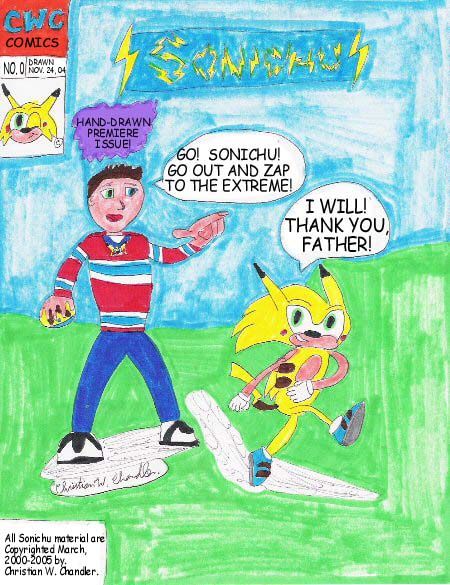
Even from the first Sonichu story, we see that the " electrical hedgehog Pokemon " is not the star of his strip. The very cover of " Issue Zero " has comic Chris-Chan telling Sonichu to " Zap out to the Extreme ", and Sonichu thanking his " father " for the instruction. The dynamic between Chris-Chan and Sonichu is meant to be father and son, but it goes without saying that biology would not allow a virgin birth of a cartoon animal to a human male. Instead, Sonichu serves as Chandler's idealized avatar-- if the Chris-Chan who appears in the comic is meant to represent Chandler's " dogged nice guy " conception of himself, then Sonichu is who Chandler wants to be, the children's hero who thrives within a never-maturing status quo.
Not only does Chris-Chan hog the cover, but he serves as the narrator for the debut story. He frames the story as its " intrusive creator ", telling us how the unwitting influence of Super Sonic transformed a Pikachu into Sonichu, and a Raichu into his female counterpart and girlfriend Rosechu. The Pikachu is literally just sitting there, about to be eaten by a monster, when he is transformed into Sonichu. After the transformation, he immediately fights and defeats the monster. He's cheered by the public, is impressed by his newfound power and ability to speak, and does not hesitate to rename himself " Sonichu ". Chris-Chan starts and ends this sequence, reminding us that Sonichu is his creation-- Chandler not only lives vicariously through Sonichu, but feeds off of the hypothetical adulation Sonichu receives, hoping that there will be a trickle-down fandom from his creation to him. He's creator and fan in one.
The episode concludes with a " Who's Who " list, involving Sonichu, Rosechu, the " Chaotic Combo " of other recolored hedgehog characters, the villains ( based on Chandler's real-life antagonists ), and three mysterious new Sonichus. There's not much to say about this as writing, since it's clearly telling and not showing. But it does reinforce the idea that Sonichu is about a status quo-- and in later chapters, that status quo finds itself under threat and has to resist.
More to Come..
* I'm referring to the real world Christian Weston Chandler by his last name, while the in-comic CWC will be called " Chris-Chan ".
** And this is NOT because of his autism. While Chandler may use his autism diagnosis as an attempt to excuse his problems, too many people bash him in context of his condition. Autism does not make people do any of the things Chandler has done, and calling him things like " that autistic fuck " or " autistic man-child " in the comments will not be tolerated.
Labels:
chris-chan,
christian weston chandler,
crap,
fandom issues,
postmodernism,
rosechu,
sonichu
Wednesday, August 11, 2010
Great Moments in Otherwise Terrible Comics?

Here's a question for you all to actively answer in the comments...
What are your favorite scenes in crappy comics?
To give you an example, I'll discuss the good stuff I found in The Other, the big Spider-Book crossover written by JMS ( whose Spider-Man I discussed earlier, after the above cat sat on my copies of his work ), Reginald Hudlin, and Peter David, with art by Mike Deodato Jr., Pat " the Transman " Lee, and the late, lamented Mike Wieringo...
-- There were a lot of excellent character moments with Peter and his supporting cast, both his family and his Avengers comrades. Peter's death sentence stirred a lot of drama to the surface, insights that we might not otherwise have seen. MJ gives a heartbreaking speech about how Peter subconsciously goes into battle half-cocked out of a death wish born of survivor's guilt. Aunt May internally curses Uncle Ben for not allowing Peter to move on with his life. And Peter himself has a great scene where he almost kills a villain, cursing how unfair it is that he's being punished for trying to atone for one mistake he made, and talking about being free to make another big mistake as he beats the hell out of the bad guy. Even after he came back ( one of many reasons why this was a stupid story ), there were some interesting points, like MJ talking about surviving Peter's ( believed ) death made her realize that she was a stronger person than she thought.
And we can't forget how Wolverine hit on the grieving MJ to distract herself from her despair, and how her words of thanks afterwards were along the lines of " I know you didn't hit on me on purpose because I'm so out of your league ".
-- Peter found some clever uses for his spider-powers after his resurrection. The spider-stingers in his wrist....well, there aren't words in human language to described how fucking ridiculous that concept is, even by superhero standards. But I liked the final issue with Peter experimenting with his powers. Seeing him find creative ways to use his abilities, like feeling the vibrations of a target through his webbing, or having a rescued child cling to his back the way he clings to walls, were pretty cool. If only he figured out how to use these without a contrived mystical experience.
-- Mike Wieringo's art was exceptional. Mike Deodato's work was good as always, and Pat Lee managed to be tolerable despite his continuing use of his trademarked " Dull Surprise " expression. But Wieringo was an exceptionally gifted cartoonist. Even with fewer lines than most superhero artists, he managed to exude character from his figures. Look at scenes like Cap tearing up upon Peter's death, Logan's reaction to MJ's aforementioned speech, and of course, Peter getting cornrows when visiting Africa. He is still very much missed. :(
These traits make this Big Lipped Alligator Moment of a story tolerable....well, almost.
So what are your picks?
Labels:
allie,
crap,
jms,
marvel,
mike wieringo,
pat lee,
peter david,
reginald hudlin,
spider-man,
the other,
wolverine
Saturday, June 12, 2010
Nemesis #2, Crowning Moment in Narrative Laziness!
For the pages in question, go here
Nemesis, the new creator-owned series by Mark Millar and Steve McNiven, is about a Batman-type vigilante who uses his unequaled skills and resources to cause crimes, rather than fight them. In the second issue, we find out the origin of Nemesis; when young Matthew Anderson's parents were arrested for hunting transients as sport, he trained himself to be the greatest criminal ever. And I quote...
" Bored shitless with his [Matt's uncle and legal guardian] endless choir practice and impeccable manners, I ran away and travelled the world, learning at the feet of its magnificent bastards. By twelve I was a gang lord. At fifteen I was Asia's largest drugs exporter. At twenty-three I headed a Zoroastrian death-cult and was finally ready to honor my mother's dying wish. "
Note how all of this is caption narration over a panel where we see a young man in a hooded sweater in a dark alley. Obviously, this is a take-off on how Bruce Wayne travelled the world to learn the ninja skills he would use as Batman. However, there are some questions raised by this, such as
1.) Why would all these " magnificent bastards " train Matt in their criminal trades? Do they take time off of stealing and murdering to mentor at-risk youth in super-villainy?
2.) How did a teenaged boy, even a precociously evil one, run a criminal empire successfully without ever getting caught?
3.) Why would he run a death cult with its name attached to an ancient religion practiced today only by hundreds of thousands ( most of whom, I'll wager, are NOT mass-murderers ).
4.) Are we going to see any of this on panel?
The answers are; not explained, not explained, not explained, and probably not. Many stories have been done about Bruce Wayne's pre-Batman life and his training in martial arts; they devoted a whole movie to it ( Batman Begins ), and it was a very good movie. Millar's logic seems to be that because we get the joke that Nemesis is Batman with the serial numbers filed off and his morals ( and color scheme ) flipped 180 degrees, we can get the joke that Nemesis would just have the same background, except trained by the wicked instead of the virtuous.
See, 70 years of Batman writers already did all the work, so Millar can just piggyback on our familiarity with Batman!
Of course, that's the way the entirety of Nemesis works. It is a story that relies on better stories to do its heavy lifting. We know that Officer Blake Morrow is supposed to be Comissioner Gordon, so we don't need to hear too much about who he is as a character, what makes him tick, how he gets along with his family ( a brief comment to his partner about Morrow's arguments with his wife is dropped in a mechanical fashion ). We know that Batman has a bunch of wonderful toys, so we don't need to see what makes Nemesis' tech any more special. We know that the Joker is the homicidal artist that Nemesis is aping, so we don't need to see any particularly unique crimes. After all, the late Heath Ledger's epic performance set the groundwork for the entire media-friendly world appreciating the Joker, so all that Nemesis needs is for us to " hear " Ledger's voice when we read the guy's word balloons!
The truth is, all I can hear from Nemesis is Christian Bale's Batman voice, trying for intimidating and ending up with ridiculous growling.
The galling part is that this comic is under Marvel's creator-owned Icon imprint, but there's very little actually CREATED here*. This is a lame joke about an iconic superhero character, stretched out in an attempt at a story. It's not entertainingly over-the-top, because it sticks so close to the source material. It's not deep, because it doesn't expand far beyond what we already know about the characters and tropes. And while there's a plot that will be going on for two more issues, thus far all we've seen is the most rudimentary duel of wits we can imagine; " I planned for you to fail like that! " " No, I planned YOU to fail like that! ". There aren't characters, there aren't conflicting ideologies, and there are barely thrills.
If you want a great story about a superhero gone bad, read Mark Waid and Peter Kruse's Irredeemable-- it's a Superman gone bad and not a Batman, but it's got much more depth and suspense. If you want a great story about a Batman analogue raised towards evil, read the Prometheus story in Grant Morrison's second JLA Deluxe hardcover. I suppose if you want a story that's an exact replica of " What if Batman was bad ", without ties to any character outside the Batman mythos, Nemesis is your book. But you should probably wait for the inevitable movie made from Millar's Nemesis script, because the cast and crew there are much less likely to phone it in.
* At least not by Millar; Dave McCaig offers excellent colors, and Steve McNiven draws in a rougher style that looks much more appealing than his hyper-rendered work on previous Millar titles. It's a shame that Millar has kept us from seeing McNiven's artwork on a decent story on three consecutive occasions.
Labels:
batman,
comissioner gordon,
crap,
grant morrison,
icon,
irredeemable,
jla,
joker,
mark millar,
nemesis,
steve mcniven
Sunday, December 20, 2009
The 2009 Humperdoozie Awards for Exceptional Blundering in American Comics
Last year, I wrote the first Humpredoozies* article, listing the dumbest things that I thought Western publishers did. Looking back, I have to admit that 2008 was quite a bit worse for comics, and this year has seen better output overall; there will always be complete turkeys in comics, but it's much less common that great work is produced, and this year's given us Chew, Asterios Polyp, Beasts of Burden, World's Most Wanted, and Dick and Damien's Excellent Adventure**, as well as more consistently good work from continuing series. I also have to admit that I should have actually written a column on the stuff I liked that year, instead of just promising it. 2008 me was far weaker at this blogging thing, but 2009 will avenge the mistakes of the past and punch them in the weiner.
But as I said, there will always be complete turkeys, and the Humperdoozies award the worst of the worst-- the comics that aren't just weakly written and drawn, but do something outstandingly stupid and reach a level of suck that isn't just forgettable, but repellant. Every medium has its flops, but comics have a smaller audience than most-- and while that means great things can happen due to the lack of supervision, it also means a tendency for asylums staffed with inmates. So without further ado, here those allegorical inmates are...
THE RORY GILMORE AWARD FOR MOST REPREHENSIBLE PROTAGONIST: Cyclops, Uncanny X-Men by Matt Fraction, Greg Land, and the Dodsons. I name this award for the young co-star of the excellent Gilmore Girls show, who became more spoiled, egotistical, and self-destructive as the show went on ( and yes, I am a heterosexual man AND a fan of GGs ). And even as Rory moved away from her mother's hard-working values to her grandparents' WASPy decadence, developed tastes in men similar to those of Eva Braun, commit actual crimes without remorse or significant consequence, and all the while acted like she was still a great student and a good person with unique insights-- it seemed that the show's writers were coming very close to acknowledging what a reprehensible, vapid bitch Rory had become, but didn't actually go through with it. Such is the case with Cyclops, the first and once greatest of the X-Man.
People have commented that Scott Summers has gone downhill since he left his saintly wife Jean Grey for the profoundly immodest ex-villainess Emma Frost, but now his decisions are even less moral than hers. What's more, Scott's not even good at being a manipulative bastard-- his schemes are bluntly obvious and only succeed on luck. He didn't defeat Norman Osborn-- he just moved the mutant community to an offshore island, cowering from Norman's dark reign in international waters. He stopped Ares and Sentry, but only did so by having two of his people make deals with even worse forces ( Hela, and the Void, respectively ). He didn't bother to think through little concerns like food, electricity, indoor plumbing, or NOT HAVING THE FUCKING THING SINK INTO THE OCEAN before he made his island nation. And he's still commanding the X-Force squad of mutant assassins, a PR nightmare in the making so great that even the Red Hulk scoffs at it. Yet even though he's done nothing except buy mutantkind time against inevitable destruction, much of which wouldn't have come about if he'd actually gotten his shit together, Scott still believes he's a great leader with a master plan.
And apparently so does Matt Fraction, because at the end of the day, Scott is still treated as the great hero whose master plan justifies throwing out Xavier's founding mission of peaceful co-existence in favor of an isolationist, segregated mutant nation on a desolate ocean rock. Meanwhile, the other X-Men comics have to deal with the nonsense status quo of Nation X, and every time a character appears in the same panel as Cyclops and isn't causing him physical and/or emotional harm, their heroism loses credibility.
THE WOLFENSTEIN 2D AWARD FOR NEEDLESS BLOODSHED ON PAGE: Blackest Night and tie-ins, by DC Comics. The past few years have seen DC's superhero comics go from being PG to practically R-rated in terms of gore. Whatever the quality of the stories have been, there seems to be an encouragement for horror-movie levels of violence. Except, unlike the better horror movies, the bright spandex trappings of the DC Universe make such displays of gorn the kind of thing you wish were joking about. Comedic heroes get capped in the head, animal sidekicks devour their owners, Black Adam has become so good at ripping people apart that he can rip someone in half with one hand while the other plays with himself, and Superboy Prime seems to be a deliberate self-parody-- he wants things to be the traditional way he remembers them, but he unleashes an orgy of dismemberment to get it every time he appears.
However, I would rather have a superhero universe that doesn't revel in blood and guts instead of one that lampshades itself and doesn't do anything about it-- and if Blackest Night is any indication, it's just going to get worse. The many characters who have died are back-- except, to further indicate why most DC writers would be a more comfortable fit on the scripts to the next few dozen SAW movies, they're back as evil zombies!*** And they go forth to further kill and eat the surviving heroes, all the while giving long speeches about how the heroes are such failures. Yes, DC Comics have finally become one big horror movie. Now they just need to ditch all the superheroes in favor of nubile teenage cannon fodder in Abercombie and Fitch decor, so they can finally stop pretending they're doing anything else.
THE KURT COBAIN AND MORTAL KOMBAT AWARD FOR POINTLESS NINETIES NOSTALGIA: Invincible 60. Granted, Image United was a more blatant example ( though I didn't read it and don't plan to ) but this " summer crossover in one issue " guest-starring everyone Image still has some rights to was really frustrating. Certainly it was an interesting idea, and far and away preferrable to Marvel or DC dragging these stories across their entire respective lines for months, but I really hoped for better from Kirkman. Invincible is one of the best superhero comics on the stands, and a prime example of how creator-owned stories are good even for traditional genre fare-- a major reason being because they don't have to deal with such crossover nonsense and can just get to the meat of the story. But this comic, which wastes many pages on casts of characters from other creators' books who will not have any meaningful development here, fell into the avoidable excesses of the rest of the superhero genre. And since many of these Image all-stars aren't big commercial draws for anyone except fans of 1990's superhero comics that didn't stop holding a torch for shoulder pads and BFGs, I don't even know if it was so important that they appear on the pages themselves, as opposed to just the cover.
Suffice to say, I give Invincible 60 this award because while the main story was good, it didn't need so much page space devoted to the crossover orgy, and that detracted from the Invincible series at hand.
THE REPETITIVE REDUNDANCY AND REDUNDANT REPETITION AWARD: Tie between Flash: Rebirth and Superman: Secret Origin, DC Comics. Geoff Johns' Green Lantern reboot has been extremely successful, even though people initially questioned the wisdom of bringing back long-dead Silver Age hero Hal Jordan. Since it's proven successful, DC has to respond the only way a big comic company in charge of a shared superhero universe can; beat that approach into the ground until it stops selling. Case in point; two series with themes and even titles lifted from key Green Lantern stories, both also written by Geoff Johns, just applied to different characters.
However, while the approach has been applied to different characters, it's been done so in a way that doesn't fit the individual case. Hal Jordan's return can be justified by the fact that he'd had a sloppily written and inconclusive death/fall from grace, and excising the Green Lantern Corps from the franchise in favor of a Peter Parker Expy being the center of attention sacrificed too much. But Barry Allen had an extremely conclusive and memorable heroic over two decades ago, and his replacement Wally West had proven himself a worthy replacement in that time ( including the many Wally West Flash stories at the hand of Geoff Johns himself ). Similarly, Green Lantern: Secret Origin was a beneficial update to Hal Jordan's backstory that helped foreshadow new developments in the series, while the Superman story; well, everyone with a passing familiarity with superheroes knows Superman, and he's already had a great many origin retellings, so why yet another one?
Since Johns is writing, there's a high degree of craft involved, and the artists are excellent for both, but I would hate to have material for " The Geoff Johns Story Blueprint ", especially if I have to write " The Geoff Johns story wallows in the past regardless of the quality of the present ".
THE CRY FOR JUSTICE AWARD FOR BEING CRY FOR JUSTICE: Cry for Justice, DC Comics. Yes, Cry for Justice falls into the " Shaped like Itself " category, because this thing is so profoundly ridiculous that it doesn't fit into anyone category. The creative team was promising-- James Robinson is a respected veteran of DC comics, and the shots we saw from digital painter Mauro Cascoli were beautifu, but in practice all they've done is create a work that takes itself far more seriously than it should. It's similar to Blackest Night in terms of the violence, but instead of taking refuge in horror-movie audacity, it treats itself like Big PRestigious Story in the vein of Kingdom Come-- and fails spectacularly at doing so.
To the people outside the DC Comics offices ( and probably a few inside, if they care to admit it ), this is not a great work. It is a ridiculous story that treats some of the biggest cliches' in superhero comics like they're somehow novel. The veteran heroes who decide to take a hard line against super-crime are not only ripping off books like X-Force and the Authority that have been doing that for many years, but they're quite obviously echoing the use of torture in the War on Terror, without doing it in a context with even the slightest resemblance to the real world's depth. So, instead of increased stakes for the Justice League, we get the protagonists coming off as grumpy old men, trying to use the tactics of the people they're trying to keep off their lawns.
And it just gets worse from there. Characters are brought from various corridors of the DCU to receive grim-and-gritty updates-- Congo Bill, a human mind in an ancient gorilla body, comes in to weep over his fallen brethren and demand vengeance himself. The Atom, a character with the inherently unimpressive power of shrinking, uses it to step inside captives' heads and interrogate them by stomping on their brains ( and he does it so often even the characters in the work itself get tired of it ). Black Canary is kept absent for the first part, but later comes back to chastise her husband Green Arrow for his actions-- and, because apparently having her as a strong independent heroine wasn't kosher, her complaints are more about him neglecting her feelings than his team's use of TORTURE. Meanwhile, the token female on the main cast is the teenaged Supergirl-- hanging out with a bunch of middle-aged men, with only Captain Marvel Jr. around to diffuse the impression that she's just their shared Lolita.
The story is profoudnly melodramatic. The art would be good in another title, but that would be providing said title wasn't trying so hard to impress the audience. The dialogue is some of the clunkiest ever printed in a professional work ( " We want Prometheus! And justice, when you get down to it. " ). And even amidst the release of Blackest Night, the scene in the latest issue with Roy Harper getting his arm ripped off manages to out-gorn most of its competition for pointless dismemberment. If there's one consolation, it's that this has been an unintentionally hilarious comic. But it wasn't shipped as " Laugh at Justice ", right?
THE HUMPERDOOZIES 2009 LIFETIME UNDERACHIEVEMENT AWARD: Greg Land, Uncanny X-Men. Last year I gave this prize to Jeph Loeb, who hasn't stopped doing ridiculously stupid scripts since then, but hasn't topped himself either. I also gave an award to Greg Land last year, and he hasn't changed his style-- so he wins it this year. Comic companies will always do stupid things, but rarely will they do stuff that is outright angering beyond the parameters of regular nerd rage-- and Land's continuing work fits.
Everything about Land's art that can be said has been said-- it's overly surface, the character poses are stiff and lifeless, the faces are almost universally identical to each other, the scenes use reference material to the point of plagiarism, and the women are drawn like porn stars ( even teenaged characters; perhaps I should have named this " The Roman Polanski Award " ) . And yet, he's still drawing the X-Men as half of the regular art team. Apparently, since he gets work done on time and looks pretty in an air-brushed sort of way, the nigh-complete deterioration of his willingness to do original work and express something unique with his art is an acceptable loss. This isn't just goofy art in the realm of Rob Liefeld, which at least has some endearing qualities in its technical flaws and masculine excess. This is the kind of art that is offensively bad, and deserves as little respect as the artist apparently has for his audience.
Well, I have less anger at comics this year, and I hope that I'll have even less to rant about next year, but somehow I doubt that.
* Named for the calling cry of the Grail's Messiah in Preacher, who came from Christ's bloodline, but is the result of so many centuries of inbreeding that he's regressed a few million years of evolution. " Son of God or son of Man, you don't fuck your sister and expect much good to come of it ", to paraphrase Herr Starr, that still seems to be what comic book companies excel at with their publishing decisions.
** Batman and Robin, but since that's the main story hook of the new direction, that's how I'll be referencing it.
*** I'm aware that DC editors have gone on record to argue that the Blackest Night villains aren't zombies, since they're not shambling and mindless. But they're still undead, butt-ugly, evil, and make living beings into similarly undead, butt-ugly, and evil creatures. If it looks like a duck, quacks like a duck, etc..
But as I said, there will always be complete turkeys, and the Humperdoozies award the worst of the worst-- the comics that aren't just weakly written and drawn, but do something outstandingly stupid and reach a level of suck that isn't just forgettable, but repellant. Every medium has its flops, but comics have a smaller audience than most-- and while that means great things can happen due to the lack of supervision, it also means a tendency for asylums staffed with inmates. So without further ado, here those allegorical inmates are...
THE RORY GILMORE AWARD FOR MOST REPREHENSIBLE PROTAGONIST: Cyclops, Uncanny X-Men by Matt Fraction, Greg Land, and the Dodsons. I name this award for the young co-star of the excellent Gilmore Girls show, who became more spoiled, egotistical, and self-destructive as the show went on ( and yes, I am a heterosexual man AND a fan of GGs ). And even as Rory moved away from her mother's hard-working values to her grandparents' WASPy decadence, developed tastes in men similar to those of Eva Braun, commit actual crimes without remorse or significant consequence, and all the while acted like she was still a great student and a good person with unique insights-- it seemed that the show's writers were coming very close to acknowledging what a reprehensible, vapid bitch Rory had become, but didn't actually go through with it. Such is the case with Cyclops, the first and once greatest of the X-Man.
People have commented that Scott Summers has gone downhill since he left his saintly wife Jean Grey for the profoundly immodest ex-villainess Emma Frost, but now his decisions are even less moral than hers. What's more, Scott's not even good at being a manipulative bastard-- his schemes are bluntly obvious and only succeed on luck. He didn't defeat Norman Osborn-- he just moved the mutant community to an offshore island, cowering from Norman's dark reign in international waters. He stopped Ares and Sentry, but only did so by having two of his people make deals with even worse forces ( Hela, and the Void, respectively ). He didn't bother to think through little concerns like food, electricity, indoor plumbing, or NOT HAVING THE FUCKING THING SINK INTO THE OCEAN before he made his island nation. And he's still commanding the X-Force squad of mutant assassins, a PR nightmare in the making so great that even the Red Hulk scoffs at it. Yet even though he's done nothing except buy mutantkind time against inevitable destruction, much of which wouldn't have come about if he'd actually gotten his shit together, Scott still believes he's a great leader with a master plan.
And apparently so does Matt Fraction, because at the end of the day, Scott is still treated as the great hero whose master plan justifies throwing out Xavier's founding mission of peaceful co-existence in favor of an isolationist, segregated mutant nation on a desolate ocean rock. Meanwhile, the other X-Men comics have to deal with the nonsense status quo of Nation X, and every time a character appears in the same panel as Cyclops and isn't causing him physical and/or emotional harm, their heroism loses credibility.
THE WOLFENSTEIN 2D AWARD FOR NEEDLESS BLOODSHED ON PAGE: Blackest Night and tie-ins, by DC Comics. The past few years have seen DC's superhero comics go from being PG to practically R-rated in terms of gore. Whatever the quality of the stories have been, there seems to be an encouragement for horror-movie levels of violence. Except, unlike the better horror movies, the bright spandex trappings of the DC Universe make such displays of gorn the kind of thing you wish were joking about. Comedic heroes get capped in the head, animal sidekicks devour their owners, Black Adam has become so good at ripping people apart that he can rip someone in half with one hand while the other plays with himself, and Superboy Prime seems to be a deliberate self-parody-- he wants things to be the traditional way he remembers them, but he unleashes an orgy of dismemberment to get it every time he appears.
However, I would rather have a superhero universe that doesn't revel in blood and guts instead of one that lampshades itself and doesn't do anything about it-- and if Blackest Night is any indication, it's just going to get worse. The many characters who have died are back-- except, to further indicate why most DC writers would be a more comfortable fit on the scripts to the next few dozen SAW movies, they're back as evil zombies!*** And they go forth to further kill and eat the surviving heroes, all the while giving long speeches about how the heroes are such failures. Yes, DC Comics have finally become one big horror movie. Now they just need to ditch all the superheroes in favor of nubile teenage cannon fodder in Abercombie and Fitch decor, so they can finally stop pretending they're doing anything else.
THE KURT COBAIN AND MORTAL KOMBAT AWARD FOR POINTLESS NINETIES NOSTALGIA: Invincible 60. Granted, Image United was a more blatant example ( though I didn't read it and don't plan to ) but this " summer crossover in one issue " guest-starring everyone Image still has some rights to was really frustrating. Certainly it was an interesting idea, and far and away preferrable to Marvel or DC dragging these stories across their entire respective lines for months, but I really hoped for better from Kirkman. Invincible is one of the best superhero comics on the stands, and a prime example of how creator-owned stories are good even for traditional genre fare-- a major reason being because they don't have to deal with such crossover nonsense and can just get to the meat of the story. But this comic, which wastes many pages on casts of characters from other creators' books who will not have any meaningful development here, fell into the avoidable excesses of the rest of the superhero genre. And since many of these Image all-stars aren't big commercial draws for anyone except fans of 1990's superhero comics that didn't stop holding a torch for shoulder pads and BFGs, I don't even know if it was so important that they appear on the pages themselves, as opposed to just the cover.
Suffice to say, I give Invincible 60 this award because while the main story was good, it didn't need so much page space devoted to the crossover orgy, and that detracted from the Invincible series at hand.
THE REPETITIVE REDUNDANCY AND REDUNDANT REPETITION AWARD: Tie between Flash: Rebirth and Superman: Secret Origin, DC Comics. Geoff Johns' Green Lantern reboot has been extremely successful, even though people initially questioned the wisdom of bringing back long-dead Silver Age hero Hal Jordan. Since it's proven successful, DC has to respond the only way a big comic company in charge of a shared superhero universe can; beat that approach into the ground until it stops selling. Case in point; two series with themes and even titles lifted from key Green Lantern stories, both also written by Geoff Johns, just applied to different characters.
However, while the approach has been applied to different characters, it's been done so in a way that doesn't fit the individual case. Hal Jordan's return can be justified by the fact that he'd had a sloppily written and inconclusive death/fall from grace, and excising the Green Lantern Corps from the franchise in favor of a Peter Parker Expy being the center of attention sacrificed too much. But Barry Allen had an extremely conclusive and memorable heroic over two decades ago, and his replacement Wally West had proven himself a worthy replacement in that time ( including the many Wally West Flash stories at the hand of Geoff Johns himself ). Similarly, Green Lantern: Secret Origin was a beneficial update to Hal Jordan's backstory that helped foreshadow new developments in the series, while the Superman story; well, everyone with a passing familiarity with superheroes knows Superman, and he's already had a great many origin retellings, so why yet another one?
Since Johns is writing, there's a high degree of craft involved, and the artists are excellent for both, but I would hate to have material for " The Geoff Johns Story Blueprint ", especially if I have to write " The Geoff Johns story wallows in the past regardless of the quality of the present ".
THE CRY FOR JUSTICE AWARD FOR BEING CRY FOR JUSTICE: Cry for Justice, DC Comics. Yes, Cry for Justice falls into the " Shaped like Itself " category, because this thing is so profoundly ridiculous that it doesn't fit into anyone category. The creative team was promising-- James Robinson is a respected veteran of DC comics, and the shots we saw from digital painter Mauro Cascoli were beautifu, but in practice all they've done is create a work that takes itself far more seriously than it should. It's similar to Blackest Night in terms of the violence, but instead of taking refuge in horror-movie audacity, it treats itself like Big PRestigious Story in the vein of Kingdom Come-- and fails spectacularly at doing so.
To the people outside the DC Comics offices ( and probably a few inside, if they care to admit it ), this is not a great work. It is a ridiculous story that treats some of the biggest cliches' in superhero comics like they're somehow novel. The veteran heroes who decide to take a hard line against super-crime are not only ripping off books like X-Force and the Authority that have been doing that for many years, but they're quite obviously echoing the use of torture in the War on Terror, without doing it in a context with even the slightest resemblance to the real world's depth. So, instead of increased stakes for the Justice League, we get the protagonists coming off as grumpy old men, trying to use the tactics of the people they're trying to keep off their lawns.
And it just gets worse from there. Characters are brought from various corridors of the DCU to receive grim-and-gritty updates-- Congo Bill, a human mind in an ancient gorilla body, comes in to weep over his fallen brethren and demand vengeance himself. The Atom, a character with the inherently unimpressive power of shrinking, uses it to step inside captives' heads and interrogate them by stomping on their brains ( and he does it so often even the characters in the work itself get tired of it ). Black Canary is kept absent for the first part, but later comes back to chastise her husband Green Arrow for his actions-- and, because apparently having her as a strong independent heroine wasn't kosher, her complaints are more about him neglecting her feelings than his team's use of TORTURE. Meanwhile, the token female on the main cast is the teenaged Supergirl-- hanging out with a bunch of middle-aged men, with only Captain Marvel Jr. around to diffuse the impression that she's just their shared Lolita.
The story is profoudnly melodramatic. The art would be good in another title, but that would be providing said title wasn't trying so hard to impress the audience. The dialogue is some of the clunkiest ever printed in a professional work ( " We want Prometheus! And justice, when you get down to it. " ). And even amidst the release of Blackest Night, the scene in the latest issue with Roy Harper getting his arm ripped off manages to out-gorn most of its competition for pointless dismemberment. If there's one consolation, it's that this has been an unintentionally hilarious comic. But it wasn't shipped as " Laugh at Justice ", right?
THE HUMPERDOOZIES 2009 LIFETIME UNDERACHIEVEMENT AWARD: Greg Land, Uncanny X-Men. Last year I gave this prize to Jeph Loeb, who hasn't stopped doing ridiculously stupid scripts since then, but hasn't topped himself either. I also gave an award to Greg Land last year, and he hasn't changed his style-- so he wins it this year. Comic companies will always do stupid things, but rarely will they do stuff that is outright angering beyond the parameters of regular nerd rage-- and Land's continuing work fits.
Everything about Land's art that can be said has been said-- it's overly surface, the character poses are stiff and lifeless, the faces are almost universally identical to each other, the scenes use reference material to the point of plagiarism, and the women are drawn like porn stars ( even teenaged characters; perhaps I should have named this " The Roman Polanski Award " ) . And yet, he's still drawing the X-Men as half of the regular art team. Apparently, since he gets work done on time and looks pretty in an air-brushed sort of way, the nigh-complete deterioration of his willingness to do original work and express something unique with his art is an acceptable loss. This isn't just goofy art in the realm of Rob Liefeld, which at least has some endearing qualities in its technical flaws and masculine excess. This is the kind of art that is offensively bad, and deserves as little respect as the artist apparently has for his audience.
Well, I have less anger at comics this year, and I hope that I'll have even less to rant about next year, but somehow I doubt that.
* Named for the calling cry of the Grail's Messiah in Preacher, who came from Christ's bloodline, but is the result of so many centuries of inbreeding that he's regressed a few million years of evolution. " Son of God or son of Man, you don't fuck your sister and expect much good to come of it ", to paraphrase Herr Starr, that still seems to be what comic book companies excel at with their publishing decisions.
** Batman and Robin, but since that's the main story hook of the new direction, that's how I'll be referencing it.
*** I'm aware that DC editors have gone on record to argue that the Blackest Night villains aren't zombies, since they're not shambling and mindless. But they're still undead, butt-ugly, evil, and make living beings into similarly undead, butt-ugly, and evil creatures. If it looks like a duck, quacks like a duck, etc..
Labels:
crap,
cry for justice,
cyclops,
dc comics,
geoff johns,
greg land,
humperdoo,
image,
invincible,
robert kirkman,
uncanny x-men
Subscribe to:
Posts (Atom)