Ruby Nation

Ruby Nation
Ruby Nation: The Webcomic
Showing posts with label x-men. Show all posts

Tuesday, December 24, 2013

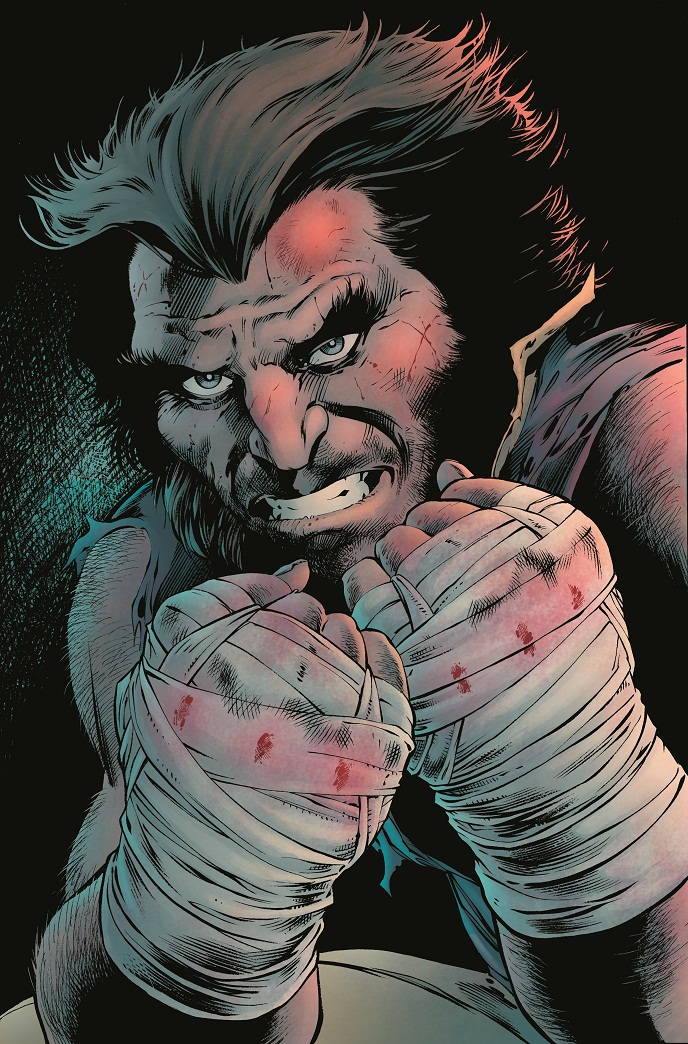
Wolverine By Paul Cornell and Alan Davis, Superhero Comic of the Year

This is the year where I finally put my money where my mouth is and drifted away from mainstream superhero comics. It wasn't because the books were offensively bad, just that most of them weren't really going anywhere that wasn't permitted by the dual demands of movie licensing and comics continuity. One of the comics that got around those and remained consistently memorable, however, was the new Wolverine book by Paul Cornell and artist Alan Davis.

On the surface, one could say that this was another case of a comic being an adaptation of its own adaptation, since the big hook for Cornell's story is Logan losing his healing factor and becoming Killable-- the thing that happened in the Wolverine movie, which I still have yet to see. However, Cornell has done exemplary work showing us how Wolverine is adapting-- or not adapting, rather-- with his newfound mortality. Without a mutant regeneration ability that can cure him of every ailment conceivable, from being drunk to being hit with Little Boy *, the list of new problems that Logan must face are endless. In the very first issue after a sentient virus burns out his healing factor, Logan realizes that he has to be careful with EVERYTHING-- he even considers buying a practice shaving razor, as his previous shaving techniques were much rougher. Logan is unparalleled at ignoring pain, but that's because pain is the body's signal that something is wrong, and there used to be nothing that Logan's magic healing flesh couldn't fix. Now he has to worry about not only normal human injuries, ailments, intoxications, and all-around mortality, but he also has to deal with the added disabilities of his other powers.

 Immediately after Logan is diagnosed as "mortal" by Hank McCoy, he's prescribed a drug to counteract the heavy metal poisoning of his adamantium skeleton, which would otherwise kill him rather quickly. The metal skeleton may be unbreakable, but it also makes him vulnerable to electro-magnetic attacks, and early issues imply that Logan's torn up his own ligaments against his metal bones in past berserker rages (just that he didn't notice because he immediately healed up). He can't use his claws without bleeding a lot, making his primary weapon a double-edged sword. And his heightened senses also make him more vulnerable to sensory attacks-- as seen when he's drugged by some ninja enemies, and starts tripping even harder than an ordinary man.

This is why the book has become so intense, even if Logan gets his healing factor back-- we finally see the character as VULNERABLE. There have been other stories where Wolverine has lost his powers**, but they haven't been nearly as brutal in showing Logan's emotional responses. Even his legendary stoicism is challenged, as everything Logan used to rely on to do his job is compromised, and he has to live his life with caution. If that weren't enough, his enemies are aware of his newfound mortality, and are using it to toy with Logan's emotional weaknesses as well as his physical ones. Mystique slips into his bedroom unnoticed to steal an heirloom sword, making it clear that she could kill him any time she wanted, but is just toying with him. Sure, Wolverine can put on a brave face and fight back, but it's becoming increasingly clear that his ability to overcome weakness with a manly man attitude has its limits. A lot of his actions now seem motivated by a desire to compensate for this and prove to others that he's still got it, such as picking a fight with the Black Panther (ex-husband of Wolverine's friend-with-benefits Storm), or going off on a quest in search of his stolen sword despite knowing it's an obvious trap.

Marvel seems to have realized how good this book is, and has heavily promoted the series' relaunch, which implies that Wolverine will become a super-villain, retraining himself by working alongside the super-powered crooks he used to turn into sashimi. The new costume is inspired by samurai armor, not just to protect Logan's weakened body, but to reflect his new mood. In this series, Logan has made several references to samurai culture, but with a more cynical edge than before; though he admires the ideal of bushido, he's sickened by the reality of the samurai culture, as mercenary dogs of the aristocracy. But that's what Logan might have to do now, if he wants to get his edge back. He could only fight his arch-enemies like Sabretooth to a standstill even when he had his healing factor, and now that he's lost such an advantage, he's got to find another way to stand up to the most despicable mass-murderers on Marvel's Earth.

The Nietzche line of "he who fights monsters" has always been a theme in Wolverine comics, as his innate brutality proves necessary to protect the innocent, but keeps him on the edge of becoming as bad as his foes. Now that Logan's lost his X-Gene crutch, he's much less stable, and may well fall off that edge. And even if he gets his healing factor back at some point, he may never atone for what he'll have to do to reclaim the level of viciousness needed to defeat Sabretooth.

This has been an excellent comic, and everything I look for in a Marvel book. Paul Cornell is superb at making Wolverine a sympathetic character, and the story is gripping from issue to issue. The art by Alan Davis needs to introduction, as Davis is unquestionably one of comics' legends. But the fill-in issues by Mirco Pierfederici were surprisingly good, even under Davis' shadow; he did a great job selling Wolverine's newfound vulnerability, as he finally is able to get drunk and ends up in a disarmingly weepy state. And new artist Ryan Stegman looks like he'll do another great job, fresh off his "Superior"*** work on Superior Spider-Man. I actually look forward to where this book goes next. You should too.

* From the Marvel Knights Logan series, by Brian K. Vaughan and Eduardo Risso. Wolverine was apparently at ground zero when Hiroshima was bombed, fighting against Imperial Japan and getting laid for the first time. Logan explicitly mentions the parallels between losing his virginity and entering the atomic age. I AM NOT MAKING THIS UP.
** Most notably in Larry Hama's epic run on Wolverine, in which his healing factor is burnt out by the strain of Magneto tearing out all the adamantium. This is unfortunately undercut by the fact that, after a year of being vulnerable and having to rely on bone claws, Logan's healing factor overclocks and turns him into a feral brute whose noseless face is covered by a pirate mask and has huge wads of forearm hair. Again, I AM NOT MAKING THIS UP.
*** Too easy, I know

Tuesday, September 10, 2013

My Interview With Webcomic Underdogs On My Comics & My Disability


" Not only are my comics therapeutic for me, but my particular conditions (co-morbid depression and anxiety as well as autism) are essential to the creative process. At its core, underneath the convoluted narrative and superhero genre trappings, Ruby Nation is a story about how our physical and mental imperfections shape us, and how we are ultimately defined by our choices in response to such trauma and isolation. I’ve used the tag-line “Broken Heroes for a Broken World”, which could also describe many of the most enduring superhero characters. A key difference in my work, however, is that the characters have realistic handicaps to go with their fantastical ones; for example, Jiro himself is autistic in addition to having a largely cybernetic body and brain. I think it makes characters more complex and ultimately sympathetic to give them that kind of texture, as opposed to simply having fantastical angst-giving handicaps (for example, Cyclops of the X-Men has brain damage that prevents him from controlling his optic blasts, but that childhood head trauma manifests in no way other than forcing him to wear his visor and frequently whine about it) "

(Full article here)

Wednesday, September 4, 2013

That Time The Beast Lost His Brains

I do strongly recommend this as an enjoyable superhero story, my kvetching about the disability representation notwithstanding.

Finding disability studies-themed readings of comics is difficult, so if I'm to keep this blog around (and I want to do so), that's what I'll focus on. So without further adieu;

It's a common plot in any series where the hero has a superhuman ability, to take away that superhuman ability and force the hero to cope with being brought down to a normal level. For the superhero themselves, that's a disability (as disability itself is a social construct; the one-eyed man being king in the land of the blind, to use an old cliche), because their normal involves having that superhuman ability. Of course, the writers usually aren't aware that they're touching on any disability themes when they do these stories, even when they take the story to such extremes that it rings painfully true for some members of the audience with similar kinds of experience. Case in point: Hank "the Beast" McCoy's loss of intelligence in the late 80's X-Factor (original X-Men team) comics.

I'll keep the continuity mentions to the foot notes so that the meat of the essay will be as readily understandable as possible, even for non-comic readers. All you need to know about the story is a basic run-down of the Beast's history. He was born Hank McCoy, a mutant with superhuman strength, agility, and prehensile toes, as well as a super-genius intellect that contrasted his animalistic powers. In his adolescence Hank started his superhero career as an original X-Man, and later launched a solo career with a new, blue fur-covered look he acquired from foolishly testing a mutant extract potion on himself. After joining various superhero teams (including a few reunions with the X-Men), he eventually rejoined the original X-Men when they formed X-Factor*. In what appeared to be an effort to court original X-Men fans' nostalgia, Hank was kidnapped in the second issue by a mad scientist who tested an anti-mutant drug on him, which caused him to lose the fur (but not his strength).

Hank kept his passable-as-human look for a while, but encountered a cruel twist of fate when he was infected by a villain named Pestilence. Pestilence's plagues interacted with the earlier anti-mutant drugs to overactivate his immune system, causing his physical strength to increase exponentially with each exertion. However, every time Hank used his mighty muscles, he not only became stronger, but also stupider-- apparently his power was "drained from his mind", or some other such pseudo-scientific explanation, as though he were an RPG character who sacrificed the INT stat to boost the STR stat. Over the course of a single battle Hank went from a PHD bio-chemist with the strength of a gorilla to...effectively the Incredible Hulk, a brutish man-child with the strength to lift buildings but with a sub-normal level of cognition.
From a Fantastic Four tie-in issue, where Hank's brain damage was used to remind the deformed Sharon Ventura that she shouldn't complain because she still had her mind. The "Inspirationally Disadvantaged" trope, I suppose.

This kind of degenerative neurological condition would normally raise a lot of different questions. For example, what parts of Hank's brain were damaged by his over-active immune system? Was he losing basic cognitive processing power? Was he losing memories? Were his motor skills affected? Was the damage in terms of the "data" inscribed upon his grey matter, or was he actually causing physical injury to his head? And how far would Hank's intellectual deterioration progress? Would he end up in an animalistic state, or would he just become completely vegetative?

I had all these questions when I read these old issues for the first time. Unfortunately, none of them were answered. Instead, we got nearly a year's worth of comics where Hank was a bumbling dolt, while his teammates gave only token attempts to discourage him from further exerting himself. While the rest of the cast was in the midst of their own typical X-Drama, Bobby "Iceman" Drake made the only overt attempts to help Hank navigate the world, such as covering for him during TV interviews. Apparently nobody bothered to take Hank to a doctor, especially not a superhuman doctor like Reed Richards or Hank Pym (the kind of people who could actually do something).

Ultimately this strangely overlooked sub-plot was resolved in the most convenient way possible, when Hank was infected for a third time-- this time by a villainess named (appropriately) Infectia, who'd been dating Bobby so she could make him her super-powered love slave. When Bobby ignored Hank's warnings over Infectia's true agenda (thinking that Hank was too stupid to know anything about anything, even though anyone not thinking exclusively with their dick could've seen that a woman named INFECTIA was bad news), Hank jumped in and took a kiss from her meant for Bobby, which wreaked havoc with his physiology, but ultimately caused him to revert to his pre-X-Factor blue form, regain all his lost intelligence, and keep all the strength he'd gained**. (Somehow).

This story occurred during the critically acclaimed run of Louise Simonson and her husband Walt Simonson, on script and art respectively. Presumably the whole physiological rigamarole was a convoluted means to make the Beast blue and furry again. Unfortunately, it fell into the trope of the temporary disability-- the impairment that only lasts an episode/issue or two so the hero can learn a lesson. And even then, it's not clear that Hank really needed to learn anything. Was losing his intellect a punishment for the sin of pride in returning to his more attractive human form? Because other than appreciating the fact that he didn't look like the Cookie Monster with a Flock of Seagulls haircut anymore, Hank never showed any arrogance over his transformation-- largely because he was barely passable as human to begin with, forced to wear special footwear to suppress his huge, prehensile feet. Was this meant to show off his heroism, proving that Hank would sacrifice anything to do the right thing? I can buy that explanation, because it is a tremendous loss-- even though superheroes risk their lives on a daily basis, lives mean less to most people than their reputations and their legacies. Especially for one of the world's sharpest minds, and one of the few mutants to enjoy public celebrity not tied into international terrorism, to be reduced to Benjy from the Sound and the Fury.


Hank inelegantly blubbering to reporter Trish Tilby, who actually started to become romantically interested in Hank here-- to the point where she was alarmed when he returned to being a hyper-intellectual blue ape. They still dated for years, until Hank further mutated into a giant blue lion in Grant Morrison's run. Being a giant cat seems an arbitrary place for her to draw the line.

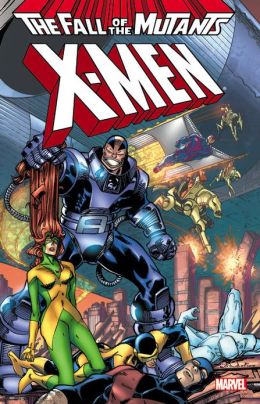
It's genuinely heart-wrenching to see how hard Hank has it with such limited brain power, especially in a scenario where the villain Apocalypse tricks Hank into sending a giant spaceship crashing into New York. And it's moving to hear Hank say that he'll do whatever he can to put things right, even if he loses what little mind he has remaining. But ultimately the story ignores the intellectual disability and all the loaded implications therein, because Hank's intellectual degradation is immediate, plateaus at the level of the Savage Green Hulk, and mostly just keeps him in the background of the main storylines. The Fall of the Mutants is considered a seminal work in the X-Canon, but how many people remember it for the master plans of Apocalypse and the rebirth of Angel as the brainwashed, metal-winged Archangel? And how many remember it for Poor Dumb Hank? Besides me, of course.

*(The original X-Factor consisted of the original X-Men pretending to be a human anti-mutant agency, promising to "control" the mutant threat while secretly rescuing and training young mutants. As many noted before me, this was the stupidest fucking premise ever for an X-Book, because the anti-mutant PR did so much harm that the few mutants X-Factor helped under their cover didn't begin to make up for it. Thankfully, the Simonsons gradually did away with this premise, and by the end of this particular storyline, X-Factor outed themselves to the public-- with surprising and well-deserved public adulation for saving the city from Apocalypse.)
** (Of course, it was soon forgotten that Hank still had that boosted strength, probably because he was really damned strong already).

Sunday, August 28, 2011

Ruby Nation: New Webcomic, Same Great Continuity!

After several moons' absence, the story that began in Ruby's World finally returns. Ruby Nation picks up three months after the end of World, with Ruby and her team actively working to build their super-soldier refugee state while having to maintain their morals in light of the circumstances (and what they'll be forced to do)

If you didn't read Ruby's World, you can do so any time you like, but you don't have to. The purpose of this "reboot" was as a jumping-on point for new readers. The prologue hits the ground running, but all the details should become apparent in the coming weeks for those just coming to the party. As a longtime reader of superhero comics, I'm aware both of the richness that an established history can bring, and the downsides that come with its misuse. When the history becomes too prominent, it keeps new readers from being able to understand what they're seeing. And even if the continuity is explained, it's like being told about a great story secondhand, rather than actually seeing the story. I'd rather not subject people to my personal nostalgia (except for the Halloween cosplay sketches).

There is a middle ground between having a past and being enslaved by it, however. Many of the greatest series I've read/seen/played have clearly defined backstories. The X-Men didn't become popular until the International team debuted in the 70's, keeping parts of the original iteration but forging a new path. Buffy, the greatest fantasy show ever, was based on the backstory of an utterly terrible movie attempt. And Metal Gear Solid's postmodern mastery has its roots in the plain old Metal Gear games for the MSX, before the series had extensive cutscenes, horribly tragic fates, and homoerotic subtext bordering on actual text. Wether intentional or not, it seems like all these series had a rough start that nevertheless allowed them to grow and change into something great. Stories, as well as their storytellers, have to learn by doing.

TLDR; Ruby Nation will be to Ruby's World what Metal Gear Solid is to MSX Metal Gear.

Anyway, I'll be delivering more of these musings as the series progresses, as the simple act of creating a piece of art and putting it out there is an act of ego, so I might as well take it further and show you my process as well.

Tuesday, May 3, 2011

The Heroic Age And Its Discontents


One year ago, Marvel's big thing was the Heroic Age, returning to a place of heroes being heroes and villains being villains after years of Civil Wars and Dark Reigns. Today, this is giving way for Fear Itself, which so far has the Marvel Universe public returning to their usual state of apocalyptic panic and incompetent xenophobia. The age of the bright, cheery shared universe status quo is ending, in favor of Mighty Marvel chaos and trepidation.

And I, for one, am relieved by this development.

The Heroic Age reminded me of Civil War in the sense that the only good titles published under that banner were rebelling AGAINST the basic premise, wether intentional or not. When Civil War was going on, the framework set up by Mark Millar was so shoddy that every other writer ended up contradicting the original intention, as seen in stories where Iron Man is portrayed as an outright villain (which, to be fair, is the only thing you can do with the creator of Clor) instead of one of two morally relative sides, or stories where the heroes' attempts to capture actual wrong-doers are hobbled by bureaucracy and petty in-fighting. The Heroic Age doesn't suffer from the same problem in the sense that it's not a poorly built world-- the premise is pretty straightforward. The problem with the Heroic Age is that the setup is anti-dramatic.

Marvel's marketing of the Heroic Age was the kind of "everything's going to be alright" optimism seen during Obama's inauguration, and lost after reality set in. Because the Marvel Universe is fictional, the authors could convincingly sweep the recent past under the rug and move forward, as seen by Cyclops dodging any and all penalties for his sins in X-Force. But by the same token, peace and prosperity is NOT ideal for a fictional universe. Conflict is what motivates good drama, but the Heroic Age moved the Marvel Universe into a peacetime state, with the conflicts largely regressed back to isolated supervillain fisticuffs.

If this meant a return to books that were relatively self-contained with shared universe compatibility becoming optional, I would be all for the Heroic Age. But Marvel launched it as the new status quo for all the books. The new Director of SHIELD, a job whose occupant is required to appear in every Marvel book, is Steve Rogers. Since his reputation makes Abraham Lincoln look like a child pornographer, he'll never be caught doing the kinds of morally dubious things Nick Fury and Tony Stark had to do (and which gave Norman Osborn a hard-on). His Avengers are basically every hero under the sun, pro-registration and anti-registration alike (though that issue's been removed). And his enmity with Tony Stark was resolved in Avengers Prime, which amounted to an Asgardian adventure making Tony beg for forgiveness (despite having a good case for pro-registration, random acts of evil like Clor aside), and Steve forgiving him.

The X-Men's DeciMation dilemma was resolved, but in a half-assed way that swept the issue of the limited mutant population under the rug and exonerated Cyclops for unforgivable sins-- note how Steve Rogers doesn't seem to know about X-Force, the Legacy Virus strain in Secret Invasion, or other war crimes. Their first Heroic Age story basically ignored the hard questions and had them fight vampires, offering little more than inconsequential fight scenes and Twilight-bandwagoning*. Daredevil's descent into fanaticism would have been justified by what he'd been through and what the heroes had conveniently forgotten, but it turned out that it was just a demon using him as a meat-puppet. And the Secret Avengers' first mission (not sure about their later ones) hardly fit the tone that black ops requires, instead having them fight villains on Mars. As Ellis put it (IIRC), it's secret because nobody cares.

The books that have been genuinely compelling in the Heroic Age have been the ones questioning this optimism. Avengers Academy is the best example, because it deals with the kids traumatized by Norman Osborn's experiments, and has them counseled by the Avengers with the most baggage of their own. Captain America has made a big deal about how Bucky can't escape his past, especially when standing next to a living Steve Rogers. And the new X-Force, with Wolverine leading a team of hardened anti-heroes instead of child soldiers, openly acknowledges that some situations will require resolutions that can't be seen in the Heroic Age. Of course, these are all stories going against the nature of the Heroic Age's naive optimism. They're saying, don't let the bright marketing fool you-- the life of a hero still casts shadows.

What's been the most interesting example of the Heroic Age's tension is Stark Resilient, the first post-lobotomy story by Matt Fraction and Salvador Larocca. Thanks to erasing his brain (and the Registration Database with it), Tony doesn't remember any of his Civil War-era sins. But he's pieced together what he's done, and has almost completely stepped out of the military-industrial complex that informs modern superhero stories. Not only has he retired from his role as all-seeing police chief a la Major Zero**, but he's given up trying to engage in conflict unless provoked. His goal is to win wars preemptively by eliminating reasons for conflict, be it with the repulsor batteries threatening to replace oil, or by creating new jobs in the rebuilding of Asgard. Unfortunately, his engagement with the bad guys has gone beyond self-defense and towards an obstructive pacifism, as he simply tries to avoid conflict rather than resolving it (as seen by his show of faux-groveling in the Doc Ock story). He'll have to once more learn that sometimes force is a necessary solution, and that some enemies can't be coaxed with the promise of an improved quality of life.

Still, it's preferable to slugging vampires.

*Thank God Jubilee lost her original mutant powers, otherwise she'd be a Sparkling Vampire.

** If you've played Metal Gear Solid 4, you know just how well this comparison fits.

Saturday, April 10, 2010

Temporary Deaths: The First Deadly Sin of Modern Comics


( The first part of a seven-part series examining cliches of the last decade of American comics. Illustrations are all by yours truly. )

The Trend: A major superhero is killed off in front of the audience. The truth, however, is that they didn't actually die, and will later come back in some really contrived supernatural manner-- writers have stopped pretending that dead means dead, and will kill off a character to do stories about their absence. But the cast all believes the hero is dead, so we're subjected to long, often angsty mourning scenes before they return.

The Culprits: Batman ( Batman RIP and Final Crisis ), Captain America ( Captain America: Reborn ), an arseload of DC heroes in Blackest Night ( such as Martian Manhunter, Aquaman, Hawkman and Hawkgirl, and others who will be starring in Brightest Day ), Hawkeye ( twice in Bendis' run on Avengers ), Phoenix ( Planet X and Phoenix: Endsong ), Thor ( Thor Disassembled, though that was a case of taking the Odinson off the board until they got a creative team with a good hook for him ). The ur-example is, of course, Superman's Death in the 1990's.

The Problem: Reading superhero comics, we already have to suspend a lot of disbelief. And this isn't even counting the ability to accept a world full of gods, aliens, robots, demons, and other polygenre supernaturals. Unless you're reading a creator-owned superhero comic like Dynamo 5 or Invincible ( both of which I strongly recommend, BTW ), you're dealing with characters who are frozen in place in the interests of the franchise. Peter Parker is never going to see his thirtieth birthday, Tony Stark's origin story is going to be retconned to take place in wherever America last fought an unpopular war*, and no super-battle is going to end with the hero getting capped in the head and stuffed in a box. This isn't to say that franchise superheroes are inherently stifling to innovation, just that there are restraints that writers have to work around creatively.

Having a character get killed off with no intention of having them stay dead isn't working around the restraints, it's calling attention to them. It's reminding us that nothing that happens has consequence because everything gets reset, and in doing so, it makes the stories told during the hero's dirt cat-nap seem like a waste of time.

Take the death of Captain America. If I were to actually believe that Steve Rogers could stay dead, I would absolutely love Brubaker's stories since, because Bucky Barnes is a more interesting Captain than his Patriotic Super-Jesus predecessor. But when you stop treating these as a coming of age story about Bucky overcoming his trauma to take up his brother-in-arms' duties, and realize that said brother-in-arms was just sent off on a really contrived Groundhog D-Day scenario, it becomes less engaging because it's just Bucky as the substitute. Even though I love Ed Brubaker's writing and appreciate him keeping Bucky around as Cap, I just know that when Steve Rogers said he wanted Bucky to stay as Cap or else he'd die, that Steve was breaking the fourth wall. The whole exercise was enjoyable, but it required a lot of disbelief to be actively suspended.

Worse than that is the current situation with Batman, which follows a very similar structure, but is even more ridiculous and difficult to accept. The fact that we learn from the start that Bruce isn't dead makes it seem like all the heroes mourning him are fools, since they live in the DC Universe and are even more familiar than us with means to bring a character killed by unusual means back. And unlike with Steve and Bucky, Dick Grayson is not a more interesting character than Bruce Wayne-- he's had his sidekick inferiority complex for many moons now, and the fact that he's actually been forced to replace his mentor makes the whining super-obnoxious ( though to at least Grant Morrison's credit, the whining's been abbreviated in the main book ). We know that Dick isn't going to get the chance to step up and become the Batman, so as entertaining as the stories are, it's hard to ignore the fact that they're killing time until the main event of Bruce's return. Again, if I believed that Dick would stay as Batman ( and since Batman is a character who exists across so many different media and adaptations, it'd be easy for DC to do alt-continuity stories with the original Caped Crusader while allowing DickBat to continue and develop ), I might not have this problem.

I'm not even going to approach the blanket resurrection of Blackest Night, since I haven't actually read the final issue, but I stopped reading that series early because calling textual attention to the endless cycles of death and resurrection on superhero comics didn't make them any easier to tolerate.

The Solution: Find more unique means to take a major player off the board, ones that don't involve rigor mortis. Tony Stark has been removed from the Marvel Universe three times without killing him; once in a drinking binge, again when dying of nerve damage and faking his death to undergo surgery, and most recently when he became a fugitive bent on destroying the data in his brain. When Chris Claremont wanted to shake up the X-Men way back inthe Mutant Massacre, he didn't kill Colossus, Nightcrawler, and Shadowcat-- he just sidelined them with serious injuries, severe enough to take them off the team and shake the X-Men's confidence, but certainly not a death sentence. And Professor Xavier is the undisputed master of finding ways to disappear when a writer feels like the X-Men don't need adult supervision ( he was stranded in space during the Mutant Massacre, for example ).

With these solutions, you can do stories about a major character's absence without needing a super-silly resurrection story.

Sunday, January 10, 2010

Joss Whedon, Cyclops, and Overcoming Brain Damage Through Willpower

Joss Whedon, accomplished writer of television, films, comics, and online musicals, has a lot to say about issues of identity. The good news is that he offers a genuinely unique perspective, and openly addresses identity politics ( particularly gender and sexuality ) in pop cultural spaces where others blissfully ignore them. The bad news is that his messages, as expressed by his ensemble casts of sci-fi anti-heroes, don't always succeed. Then again, this is another product of Whedon's constant experimenting; he'll follow Buffy Season Five with Buffy Season Six.

When Joss Whedon took on writing the X-Men with his artistic collaborator John Cassaday, it seemed as though he would be exploring identity issues thoroughly-- given how Marvel mutants have been used as a metaphor for any group to ever experience systemic oppression, this would give him ready-made tools to tell those sorts of stories. As it turned out, he and Cassaday preferred to tell their own version of the " classic " X-Men formula, which tends to put them on various sci-fi " vacation " adventures instead of dealing with their race's problems. But there was one disability-themed issue that was brought up by the text-- and then tossed aside in the final act, not to be picked up by his successors.

The question Whedon raised was; why can't Cyclops control his eye beams? Was it because of head trauma, or was it really because of a psychological block from childhood?

As anyone who has read/watched an X-Men story for a five minute interval knows, Scott " Cyclops " Summers' life has been one big conga line of tragedy and despair. Not only did he grow up in an orphanage, after his parents " died "* in a plane crash and his brother was adopted instead of him, but Scott's mutant powers manifested as force blasts that poured out of his eyes, unable to be contained except by his eyelids or his " ruby quartz "** eyewear. At times it has been suggested that Scott's mutant power would naturally have been something he could control, were it not for the head injury he sustained in that fateful plane crash. So, aside from the occasional plot deus ex machina temporarily healing his skull, Scott remains unable to control his optic blasts, and lives in a state of constant self-control and emotional repression.

What Whedon did was have his morally ambiguous new girlfriend/former enemy Emma Frost give Scott a psychic " therapy session ", where Scott was taken on a tour through his many insecurities and traumas, and was confronted with the truth about his lack of power control-- at some point in his childhood, Scott subconsciously decided to make his optic blasts uncontrollable, so he would be forced to stay constantly vigilant. At that point, Cyclops decides to make another choice, and switches his power to " Off "-- for most of the second half of Whedon's story, he's basically a regular human in an X-Men jacket, his eyes even returning to their natural brown instead of a red glow.

There are two ways to view this story; one, that Whedon had Scott really deconstruct why his abilities are such a convenient curse, and another, that Whedon is equating real physical brain damage with a psychological problem you can just " snap out of ". The latter would be a problem if it were a real person's medical history being misrepresented, instead of a fictional superhero with a science-defying power*** who's been around in 47 years of stories that often contradict each other and keep him from aging past 29. As it stands, I can accept that Scott's lack of control is due to deep-seated PTSD instead of brain injury, not only because I don't want to bother with the rigors of making it fit or not within continuity, but because it's " all in your head " doesn't make it any less real or painful. However, the deconstruction would only work if it was part of an ongoing story where Cyclops further learns about how to master his powers and his emotions alike.

Since Whedon was only writing the X-Men for two years' worth of stories****, he did not take Scott much further on the journey. No, what Whedon did-- which is the really troubling part-- is show that ultimately Scott could control his optic blasts without completely shutting them off, but all this amounts to is a surprise attack against an unsuspecting bad guy. As he explains to Emma later, it is possible for him to control his power, but it takes a tremendous amount of willpower, and too taxing despite the " clarity " he feels.

So what we have is not that Scott is unable to control his blasts because of physical disability or mental illness; the problem is that he can control his power, but it's just very hard and not worth the strain. Are we supposed to infer that Scott is now content having force beams that can smash a tank constantly pouring out of his eyes, held back only by gaudy red eyewear? Is it that he's too weak and/or lazy to want total control, despite his entire life being one desperate attempt to hold onto what little order he can find? Or is the message that Scott has accepted that there's an aspect to him that he can't control, and has found piece with it?

Whatever Whedon was trying to say with this story, it doesn't matter-- it's never come up again, and Scott's still forced to wear his mask 24/7. And since Whedon didn't really go deep enough into the issue to allow for any well-founded interpretation, it's just another interesting failure for the man's catalog*****, the exploration of trauma and recovery reduced to another ill-conceived sci-fi sub-plot.

* ( As any X-Fan knows, they didn't really die, but I try to keep the backstory minimal in these essays. With the X-Men, this is a Herculean endeavor. )
** ( Why ruby quartz? Co-creator Stan Lee thought it sounded cool. Things like this make the literary reader of pop culture increasingly self-conscious about their analysis. )
*** ( According to one of the Marvel handbooks, he doesn't have eyes so much as portals to another dimension that unleash energy, with a psychic field allowing him the experience of sight, or some such. I don't think he'd have a normal human brain structure to begin with if this is the case. )
**** ( Due to delays, it took twice that long. I'm pointing it out here before it's inevitably derided by someone else. )
***** ( Which also includes Willow going from curious about sexuality to a stereotypical self-proclaimed Wicca Lesbian, Spike struggling to prove that he can be good without a soul only to get one himself and void the discussion, and pretty much every episode of Dollhouse on a conceptual level. )

Friday, October 30, 2009

New Avengers: Five Years New Retrospective-- Avenging killed the X-Book Star


In my previous essay, I touched upon the fact that Bendis’ take on the Avengers has been very similar Chris Claremont’s enduring X-Men formula. Both storytelling engines use long stories with extensive subplots and no designated end. Both have an ensemble cast that mix characters across various age, experience, and personality archetypes ( in addition to an even larger supporting cast ). And both the New Avengers and the Classic Claremont X-Men have the heroes as underdogs and outlaws struggling against a nebulous enemy that can’t ever be defeated. One might consider it redundant for Marvel to take their #2 team franchise and twist it into an imitation of their #1. I’d be surprised this complaint hasn’t been leveled more often at Marvel, but for the fact that the company has handicapped the X-Men franchise on a level that seems almost calculated to make the Avengers more significant.

I say “ seems “ because I don’t know for sure. And it would be stupid for a company to take something profitable and push it to the side in favor of a new version of something classically LESS lucrative. If Marvel really wanted the X-Men to fail so the Avengers could become their central franchise, they could just cancel the books; that’s a strategy they’ve actually used with the Ultimate Marvel revamp. They wouldn’t intentionally make the books crappy, and I don’t think the X-Books are outright bad even the franchise has taken several missteps in the past few years. But they have made the X-Men increasingly cut-off from the rest of the Marvel Universe, and that’s where the company’s creative and commercial emphasis has been of late.

So let’s say, in a strictly hypothetical context, that Marvel wanted the Avengers to be their publishing bread and butter, and wanted to diminish the X-Men to make it happen. First, they would need a motive. The exponential increase in comic book movies is good enough; Marvel’s bread and butter is in intellectual property, and while both the X-Men and Avengers have that appeal, they have the drawback that their individual characters/parts do not make up the whole. You can do a successful X-Men movie; it’s been done four times now ( even if only three of those were team movies, and only two of that fraction weren’t a waste of time, money, and Stewart ). But a Colossus movie would never happen, just as a Wasp movie wouldn’t get past the pitch; they’re decent enough as members of an ensemble cast, but don’t have the appeal or versatility for isolated endeavors. Hence New Avengers, a Justice League-style team comic made primarily of successful solo characters; Spider-Man, Captain America, Iron Man, and even lesser heroes with untapped licensing potential like Luke Cage. 

Thus they give me the perfect perfect segue; one of the successful solo heroes put on the new team is Wolverine, the X-Man most successful as an independent protagonist. At the time, Wolverine was just “ lending “ his services to the Avengers, and still stuck with the X-Men. But from our hypothetical conspiracy perspective, this is the first blow to the X-Men. The most popular character of the X-Men has been partially exported to the Avengers, his marriage to the X-Men becoming a Salt Lake City affair. Phase one of eliminating Marvel’s own competition.

Of course, that leads to ( hypothetically ) sinister phase two-- House of M. This story brings the X-Men into an Avengers story for a mega crossover, and ends up DeciMating the mutant population. Homo superior, at that point numbering in the millions and able to fill their own nations, has been magically cut down to a small fraction ( which was supposed to vary to upwards of thousands, but once the name “ the 198 “ was attached, that became literal ). Most of the important characters keep their powers, but many villains and second-string heroes just become regular people, usually shuffled off to the background. Those who survive become cloistered within the mansion, all but ignoring super-heroing to focus exclusively on the problems faced by the few mutants left. Even those mutants are no longer special, because super-humans without the X-Gene stigma far out number them. There’s no reason being a mutant is different from being a radioactive spider victim or Super Soldier specimen or other, making the minority metaphor an arbitrary, self-imposed exile.

Which is even more convenient-- or deviously schemed. After House of M, mega-crossovers become even more prominent. Every year has a big event series, and every year, the X-Men decline to participate. Sure they get a tie-in book or two, but otherwise they remain peripheral ( except for Wolverine, who’s now readily identified with the Avengers and shows up for these events ). In Civil War, they remain neutral and simply don’t engage with either side; in World War Hulk, they’re just a brief pit stop on the Hulk’s rampage, as he attacks Professor X based on the possibility that he would have joined the heroes in shooting the green bastard into space ( even though Xavier was absent during the actual event ). And in Secret Invasion, all we see is the X-Men as the San Fransisco resistance for the Skrulls’ global attack. 

Now, the X-Men franchise has continued through these events, but their storylines remain stifled and insular. They try to undo the DeciMation and restore the depowered mutants, but each time receive a microscopic nudge towards success at best. Now their plan involves making their own closed island nation while waiting for the Messiah Baby to save them. But since the X-Men’s only real mission now is trying to save the dying species, any other stories are irrelevant. If they go into space, find a lost civilization, or make a hit squad to fight zombies, it’s just trying to draw attention away from the big picture, and failing. Thus, what was once Marvel’s most important franchise is now treading water with its island of just under 200 super-malcontents, with no concern other than protecting said just under 200 super-malcontents.

Meanwhile, the Avengers has gained many of the tropes that made the X-Men popular. Large, diverse, and dynamic cast? Check-- in addition to the traditional rotations of the Avengers line-up, the book’s importance in the shared continuity gives it a huge supporting cast that pops in and out. Long stories that branch outwards instead of reaching a resolution? Check-- even after Secret Invasion wraps up one conspiracy storyline, we go directly into Dark Reign, where Norman Osborn becomes the new Big Bad. Stories where the heroes are the outsiders? Check-- the Avengers were on shaky territory with the authorities from the start of Bendis’ series, and they became the literal underground resistance after Civil War.

The difference is that in the Avengers, they are at least trying to do good, to fight against a massive multi-layered foe even if they fail. The X-Men are holed up on their island, ready to take down anyone who looks at them funny. But as Norman puts it, the X-Men can just be ignored as long as they stay off the mainland. Better for the Avengers, and their new merchandising powers.

Monday, September 28, 2009

Uncanny X-Men 515; What Cyclops Needs

As the X-Men emerge from the Dark Reign crossover Utopia, now as an isolationist nation with an almost entirely mutant population ( a good summary can be found in Newsarama's review here ), I continue to be baffled as to what writer Matt Fraction is trying to do with the X-Men's leadership. And this generally isn't a good sign for an ongoing superhero comic in the traditional model, when you have no idea if you're supposed to be reading the book ironically; is Scott Summers supposed to be a brave leader in charge of tough decisions, or is he a blundering fool?

The presentation of the character in the last issue makes him seem especially unclear. Mere moments after securing his borders, Cyclops is finally getting around to making the X-Men's island a place that can actually support a population. He's just getting to giving orders to set up food and water and power, and it's clear that the other X-Men are quickly losing faith in him. At the same time, he's acting as though he's in charge and knows what he's doing, requesting that the other mutants have faith in what he's doing. He even tells his old mentor Charles " You had a dream, I have a plan ". Except that he hasn't had a plan, he's just been stumbling around from crisis to crisis, barely breaking even.

We see that Scott Summers is breaking under the pressure of being the mutant messiah; his few quiet moments show the man completely wiped out, like he's a feather's tap away from a nervous breakdown. But he's still acting as though he's the strong, confident leader. He's making decisions, they're just really sloppy, spur-of-the-moment ones. It's like he went completely mad years ago and nobody told him.

Which makes sense given the character's backstory-- this is a man who constantly has to be careful of the death rays coming from his eyes, who was orphaned at a young age and taken in by a strange telepathic teacher who molded him into a soldier ( instead of a son ), who has been in love with one woman to the point of being with three alternate versions of her, and who recently betrayed that woman to give into a mistress ( Emma ) that appealed to his repressed desires. Except that the " Cyclops is too riddled with PTSD to be a credible leader " plot has been going on for years now. And the other X-Men haven't done jack or shit about it; they're clearly questioning his ability to save the mutant race, but they still follow him.

It's a tremendous elephant in the room, and it's going from being interesting to being maddeningly frustrating. I think at this point, the other X-Men should stage an intervention for the guy, all of his closest friends confronting him on just how damaged he is. Instead of Hank being catty ( okay, pun intended ) about Scott's poor choices, or even leaving the team in a hissy fit, how about Hank telling Scott about how he hasn't dealt with his problems? Instead of Logan slapping Scott in the face every time X-Force gets another insane murder mission, how about Logan invoking Jean Grey's name to remind Scott of how far he's fallen?

It'd certainly be better to see one of the series' most important characters build back up, instead of remaining broken and pretending otherwise.